“随便坐!” (”Seat anywhere you like”) said the usher as we huddled into the cinema peering into the dark looking out for old men and their umbrellas. Indeed, the cinema was hardly filled, the men and a couple (a man and his prostitute, I imagined) made sure they sat seats apart. It must have been strange to see us, two men and a lady, seating together in the middle of the cinema.
My colleagues and I had finally made the trip down to Yangtze Cineplex in Pearl’s Centre, which is famous for playing softcore erotic films that cater to old men with their umbrellas. It was an urban legend that we had to see for ourselves even at a cost of $8.50 a ticket! Below you will find my “imagined” map of the place, that will guide you through my adventure:
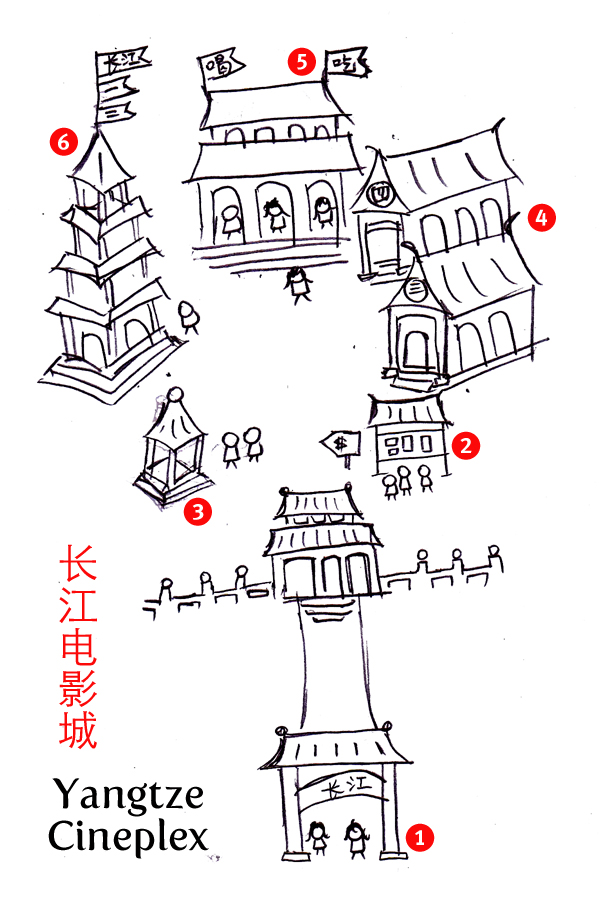
1. At the corner of the 4th floor of Pearl’s Centre, lies a little community of its own, where old men live like mandarins, indulging in sin, in the kingdom of Yangtze. Even before one enters the cineplex, one is greeted by ladies dressed to kill outside a innocent-looking massage and spa centre. They scrutinise the people entering the kingdom, waiting for the eye contact to make their move.
2. One is greeted at the entrance by photos of the movies that are being shown. There is no need for Hollywood-style posters because everyone comes here just to watch one thing — sex. So, all you have is the title of the movie accompanied by the time slots and the sex scenes in the movie. The old men stand and scrutinise the photos, picking one which would fulfil their fantasy.
3. After making a choice, whether out of a convenient time slot or because one wants “her”, proceed to the ticketing booth, manned, strangely, by an auntie. She doesn’t judge the patrons at all, she’s just here to sell tickets. And since we looked young and innocent, she asks for our ID to show that we were above 21, but no, she never questions why we are here with a lady.
4. There are four cinemas in this cineplex, two on the ground floor and another two on the second floor, each guarded by an usher who could very well pass off as one of the old men in this small community.
5. This is a self-sustained community, there is a food centre where the old men feast in typical ah pek style — teh on one hand and a girl on the other. The men have their feast here, enjoying a good chat over mee pok and bottles of beer, evoking imagery of Imperial China, where the mandarins feast and indulged in sin.
6. Finally, we headed to Yangtze 1 to watch “Time to Revenge”, a film we picked because it had just started when we arrived. To our disappointment, the legendary umbrellas were but a myth. The movie was a B-grade movie about cowboys plotting against one another and after 20 minutes in, there was yet to be a sex scene and so a patron walked out. When there was finally a sex scene, it was just a couple in their underwear lying on bed. Eventually, an hour into the movie, with not a single nude scene in sight, we decided we had enough and left.
As we left disappointed, I tried to strike a conversation with the auntie at the ticketing counter. I asked her how old the cineplex was, she snapped back asking why I wanted to know. “Curiosity?” I replied in mandarin, and she broke into a smile and said she didn’t know.
I suppose that’s how she keeps on at this job and how this cineplex continues to be tolerated — we just choose to not know about it.

 How else can Singapore look like today?
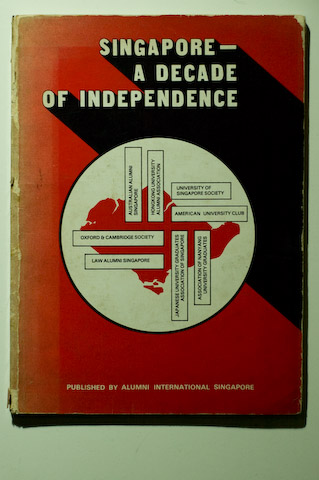
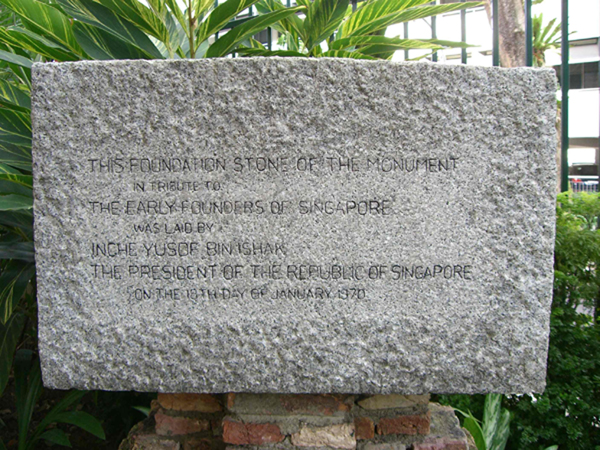 An interesting point to note was how this book was meant to raise funds for the organisation to built a “Monument to the Early Pioneers” that never came true. All that is left of this effort is a foundation stone (right) that is found in the National Archives today. It was originally located at the waterfront side of Collyer Quay and was relocated to its present location because of road works there.
 Another group that proposed an alternative vision of urban Singapore was the Singapore Planning and Urban Research Group (S.P.U.R.) that was set up in 1965 by a group of architects and planners. Its more prominent members include William Lim and Tay Kheng Soon. Its ideas and works can be found in “SPUR 1965-1967” (left), a self-published report and you can still purchase limited copies of it at