Category: Design

Less Structure, 
More Substance

FROM UNIT EDITIONS
FROM UNIT EDITIONS

Best known for having created the First Things First manifesto, one of the earliest documents that outlined the existential problem of a graphic designer in the modern commercial world during the 1960s, Ken Garland is undoubtedly one of Britain’s most significant graphic design thinker.

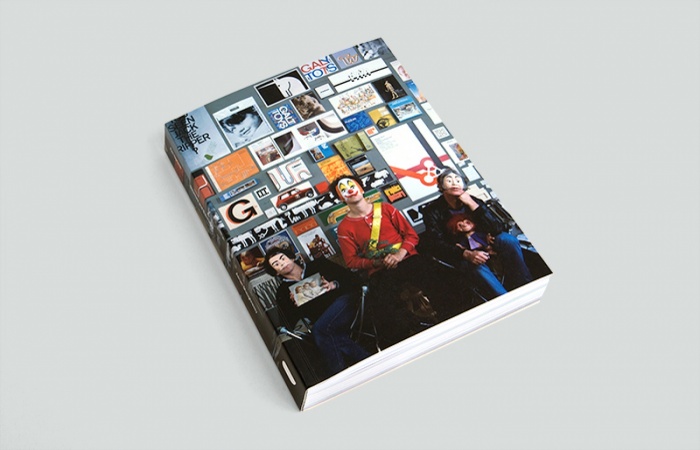
But lesser known is Garland the graphic designer, which is what Shaughnessy attempts to address in Unit Editions’ recent book Ken Garland: Structure and Substance. This 323-page monograph showcases Garland’s work over the last five decades, from 1952, when he was a student at the Central School of Arts & Crafts till the year 2009, when his independent studio Ken Garland and Associates was over forty years old.

The bulk of the book is a visual compendium of Garland’s significant works, but it is also accompanied by his photo works as well as indexes of the designer’s extensive published writings and lectures. While many of these are also available in Garland’s personal website, what makes the monograph truly comprehensive is a 65-page biography of the man who wears many hats (literally, as Garland is never seen without one of his iconic embroidered hats).

Shaughnessy’s straightforward approach to the multi-faceted Garland is to separately present each of his roles — as a graphic designer, studio owner, ethical advocate, political activist, writer, teacher and photographer. Each section details the historical context, an introduction to Garland’s significant contributions in the field, the man’s retrospective recollections, as well as the opinions of peers and associates. Read together, the biography paints the picture of Garland as a “man of substance”, a designer who is much more than about the work he produced, but a human being whose values deserve respect.

The book does a good job of tracing Garland’s roots and early life, giving readers a glimpse of what shaped the man we know. From leading a sit-in at art school to fight for life drawing classes and his conscription into the Parachute Regiment as military service, one begins to understand why Garland has a strong sense of mission and militaristic character.

The highlight of the book comes in the sections about Garland’s graphic style and philosophy, as well as features of his early works for the British trade journal Design and the children’s toys company Galt Toys. Readers are introduced to Garland’s belief in integrating image and text in his covers for Design, and they can see the depth of thinking in his approach for Galt Toys, a two decades long association best exemplified by the logo he designed, which was unconstrained by the popular rigid rules defined by corporate design manuals in the 1960s.

Beyond these pages, however, the essay begins to suffer from the structure of Shaughnessy’s approach. In comparison to what has come before, the sections on Garland’s different roles are summary, often lacking in details and purpose, which either speaks about the author’s lack of interest in these areas or his interviewee’s lack of substance in them. By sticking too closely to the structure of examining Garland’s different roles, the opportunity is also a missed in exploring how the different roles informed one another. How did Garland as a photographer or writer inform his design approach? The connections are mentioned in brief, but it seems Garland was not questioned about these relationships.

Another missing point of interest in the biography would be Garland’s writings on design that were compiled in a word in your eye, a book published in conjunction with an earlier retrospective exhibition of his work put up by The University of Reading in 1996. How has Garland’s views on design changed over the years and why so?

As with many monographs, this book is of a celebratory nature and does not take on some of the more thorny topics of the subject. It is clear from the output compiled in this book that after two decades of being in business, the designer started to lose his relevance from the ‘80s. Shaughnessy does highlight this point as well, attributing it to the changing times and tastes. But what did the man think of his work in relation to that period? Why did he stick to his core principles instead of adapting his studio?

By asking Garland more of such critical and challenging questions, the designer would have the opportunity to hit back, and truly establish himself as someone of substance — even in contemporary times.

——————

This review was originally written for a graduate programme application. 

Swapping Designs and Cultures

WebLiving up to its studio name, Foreign Policy Design Group, is helping promote Singapore graphic design by holding an exhibition exchange with design studios from around the world.

The first edition of The Swap Show will see the Singapore studio play host to the works of four design studios from Barcelona. Foreign Policy’s creative director Yu Yah-Leng had stumbled upon the works of Hey Studio, Mucho, LoSiento and TwoPoints.Net online, and was impressed enough by their work to approach them to do an exhibition exchange on a visit to Barcelona last year.

“Most these studios are not super super well-known, but they have wonderful body of works. We thought it’d be a good idea to let people know about them and their works, and not just by looking at them online but seeing the real piece of work up close,” she said in an e-mail interview.

Attendees who pay $15 (on sale for $10 until 1 March) for this month-long exhibition held in the offices of Foreign Policy can expect to see a variety of posters, publications, brand identity, packaging and typographical works from these studios. Yah-Leng says the exhibition, which is part of The Design Society Festival 2013, is not only about celebrating good works, but also a way for Singaporeans to see how design can be culturally, geographically or ideologically influenced.

Besides exhibiting the works of overseas studios, Yah-Leng was also interested in promoting Singapore graphic design to the world. So as part of the exchange, the works of Foreign Policy as well as fellow Singapore design studios Roots, Bureau and Anonymous will travel to Barcelona to be exhibited in June.

Explaining this policy, she said, “We’d think it should benefit both sides and for both cities to see what the other graphic designers’ works are. It’s not just a one-to-one but many-to-many concept.”

The Swap Show is just one programme that reflects the studio’s belief in staying connected with the rest of the world. In the middle of this year, Foreign Policy will swap designers with a studio in Oslo, Norway as part of its Design Diplomacy programme. This is to expose their staff to working in a foreign environment for a period of time and also a chance for Foreign Policy to work with overseas designers.

Said Yah-Leng, “We’d like to think it’s always great to be exposed to things new and alien, that which will open our eyes more, push us to think more/ think deeper/think wider, inspire us and elevate us to high grounds in the cognitive factor.”

Singapore Design March

The month of March promises to be an exciting one for Singapore’s design scene as exhibitions, workshops, awards, and a conference are just some events lined up for designers and design-lovers in the coming fortnight.

Kickstarting it this Saturday is The Design Society Festival 2013, which is put together by a grassroots organisation that has been holding an annual conference for local graphic designers since 2009. This year, it will expand beyond its one-day event and include fringe events organised by fellow designers to have a week long celebration of craft.

“Our annual conference has been running successfully for the last three years and we have received overwhelming support and feedback from the industry,” said Larry Peh from The Design Society (TDS). “We’ve received lots of feedbacks from overseas friends that they wished it can be filled up more events and activities to maximise their trip to Singapore. Hence, we feel the time is right to grow the annual event into a design festival.”

The design community also embraced the move as the society had little trouble getting festival partners. Amongst the fringe events, include letterpress and photography workshops, exhibitions on Barcelona design, book covers and typography, as well as a Design Trail at Tiong Bahru, currently Singapore’s most hip estate. Its collection of speciality stores and design shops will hold various open studios, talks and showcases during the festival.

Said Larry, “Tiong Bahru was chosen for the Design Trail as we want to share the creative and vibrant vibes of the estate and at the same time bring participants down memory lane in a whole new different way.  This cosmopolitan estate unlike any other in Singapore possesses a quaint art deco style with an eclectic mashup of speciality stores, design offices, boutique retail shops and a range of modern dining establishments and cafes, thus is a perfect venue for a design trail.”

For its conference at LASALLE’s Singapore Airlines Theatre this Saturday, professionals from various creative fields in Singapore and overseas will speak about “Craft”, including filmmaker Royston Tan and co-founder of Sydney and New York-based creative collective The Glue Society, Jonathan Kneebone.

The choice of this year’s theme allows the society to go beyond just design-related topics and speakers for the first time, explains Larry, and it hopes conference attendees can learn about the process of making things into reality.

He added that the positive response to its first festival has also convinced TDS to make the festival an annual affair, marking a milestone for the four-year-old society.

 SINGAPLURAL 2013

Following right behind the design festival is SingaPlural 2013, which will be ‘Celebrating Design’ during 8 to 15 March. This week long product and furniture design event is organised by the Singapore Furniture Industries Council in conjunction with the International Furniture Fair Singapore, a trade show organised for Asian furniture producers since 1981.

At this edition of Singaplural, which was first held last year, a series of workshops, exhibitions and talks will be held at the Singapore Expo and in *scape at Orchard Road. Highlights this year include the giving away of $10,000 cash to the winner of the  “Furniture Design Award 2013”, and “FutureCraft Workshop”, an exhibition of prototypes by 13 designers from Indonesia, Sweden, and Singapore who took  part in a workshop in November to find breakthroughs in modern day design using traditional materials. There will also be “Design Conversations” with European designers Ineke Hans and Luke Hughes, as well as Singapore product designers studio juju and Voon Woon on the theme “Unity in Diversity”.