Category: Cities

An Inconvenient Truth of Architecture

Does the responsibility of an architect stop at designing and not its construction?

The is the controversy sparked off by architect Zaha Hadid’s defense that it wasn’t her “duty” to look into the deaths of immigrant workers during construction work in Qatar as part of the World Cup 2022. One of the most prominent projects being built for the event is Hadid’s al-Wakrah stadium.

PHOTO: AFP/Getty Images

Like the workers who died, the London-based Hadid is an immigrant who made use of globalized networks to find work for the Qatari government. The mobility of labour today has made the building of cities into multinational projects which are often designed and constructed by foreigners and even cater to them rather than citizens. That architects like Hadid are rewarded handsomely for their concepts and designs while the people who make it into reality are often exploited and in the background points to how cities have become spectacles and brands as suggested by Shiloh Krupar and Stefan Al in their essay “Notes on the Society of the Spectacle Brand.”

The focus on architecture as an image—first as renderings and finally tourist photos—obscures architects and the public to the realities of constructing a city today. It takes an entire transient community of migrant workers to give our cities concrete permanence. Is this something architects should consider when coming up with their designs? The narrow focus of architecture as a backdrop for our lives turns the process of building into a walled-up construction site—an inconvenience waiting to be gotten rid off once it is built.

———–
Written for Anooradha Iyer Siddiqi’s
 Cultural Theory class at D-Crit in response to “Notes on the Society of the Spectacle Brand” by Shiloh Krupar and Stefan Al
CREATIVE©ITIES

“Creativity” is a buzzword in urban development today. Many governments are enacting master plans and policies to build a future city powered by industries offering creative products and services, and populated by open-minded and imaginative citizens. This idea of a “creative city” is built upon a triumvirate of ideas — creative city, creative economy and creative class — and it first emerged in the US during the global economic restructuring over a decade ago. It has since spread across the globe and become the new paradigm of what cities should be today.

image

image

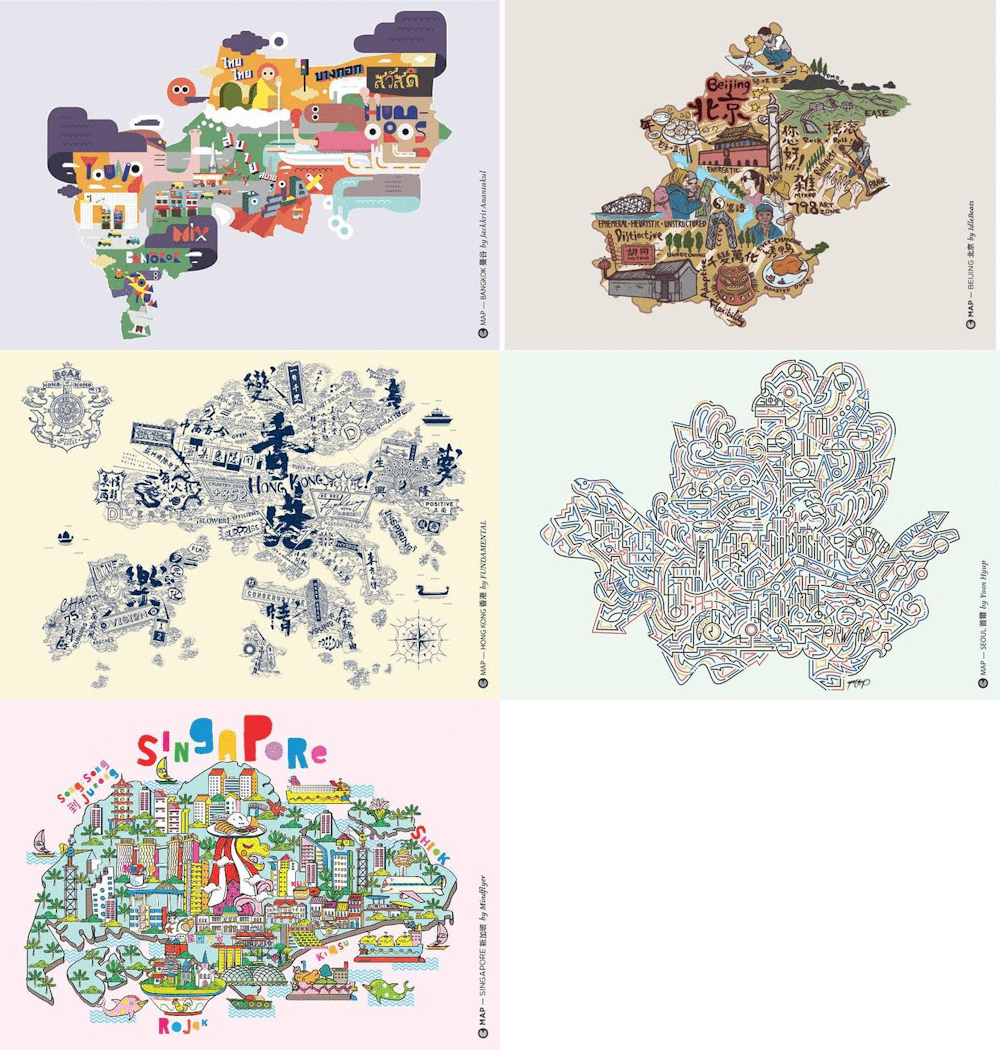
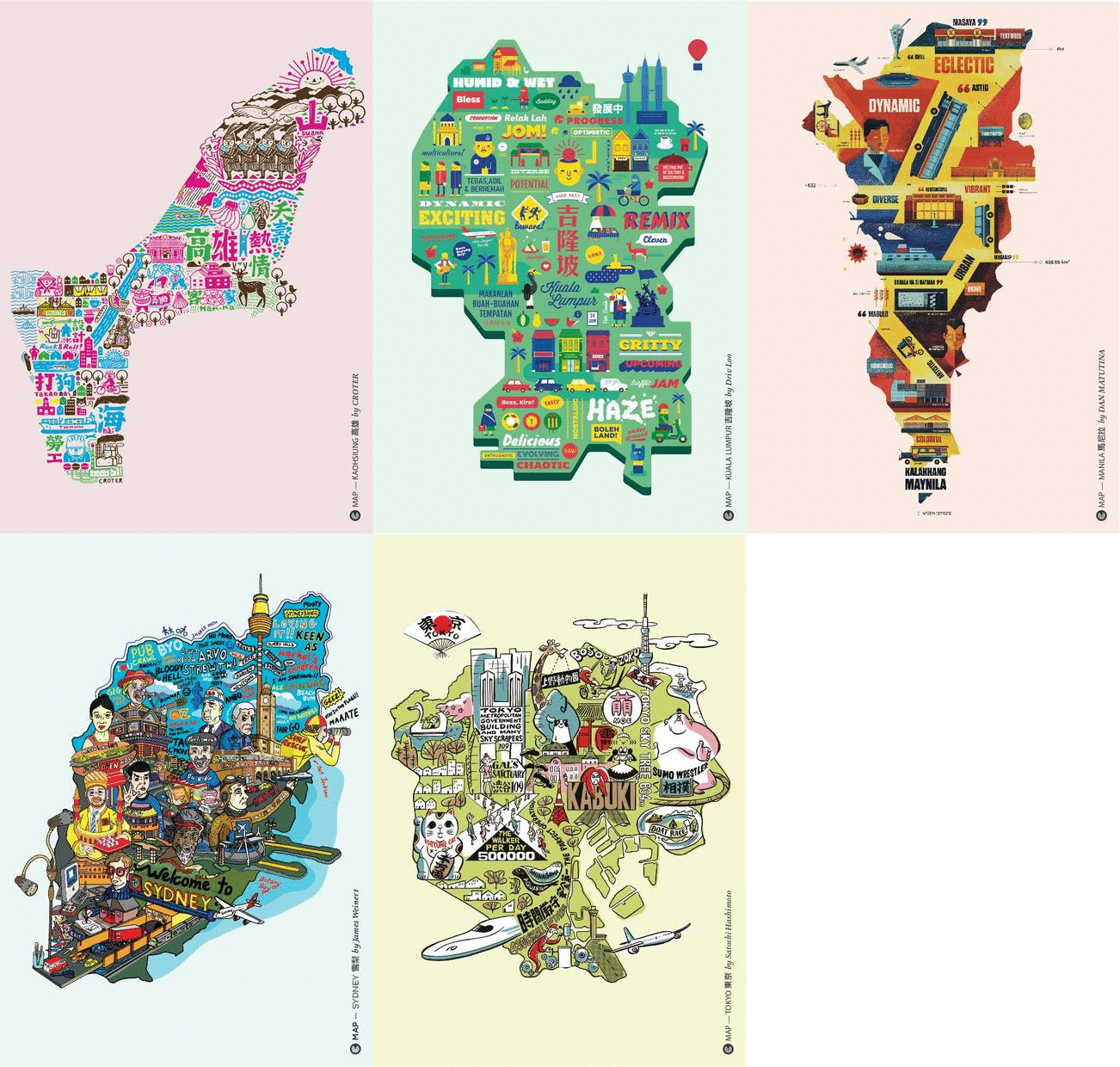
CREATIVE©ITIES is a project I worked on last year which mapped out 10 cities in the Asia-Pacific that are examples of the “metacity”. The maps were created by asking local designers and artists to recommend people, places and products and projects that represented their “creative city”. Despite the different cultures and languages across cities like Seoul, Bangkok, Manila, Singapore, there existed a common creative infrastructure including bookstores, cafes as well as art and design centers. Within them were content that crossed national and cultural borders, such as products, publications and art from the region. The “creative city” then is an international space of cultural production and collaboration, but it can also be a generic urban order easily imposed upon anywhere around the world. It matches a similar itinerary I’ve often taken in my overseas trips: despite visiting different cities, I’m always traveling the same map. 

———–
Written for Anooradha Iyer Siddiqi’s
 Cultural Theory class at D-Crit in response to“Introduction: Metropolis, Megalopolis and Metacity” by Brian McGrath and Grahame Shane

MH370: Uncovering how open cities are

ITN

Even as the Malaysian airliner MH370 remains missing, its disappearance has unwittingly uncovered the vast multi-city surveillance system hovering over us whenever we fly. 

It starts when we enter the immigration zone and our passports are checked against a database. The failure to check Interpol’s passport database—an international policing program—allowed two passengers to board the plane on stolen passports.

During the flight, the plane was then tracked not only by Malaysia, but also British satellite operator Inmarsat. Thailand’s military radar also detected it. However, this was revealed much later, showing how reluctant countries are to share defensive information for fear of compromising a nation’s technological powers (or lack of).

In the search for debris, several countries offered their satellite images—China, France, Thailand, Japan—again unmasking the constellation of eyes above our cities. 

How do we understand privacy as well as national boundaries with the existence of such surveillance technology today? The search for the missing plane shows how it takes one tiny disruption in the system to expose the porousness of borders between countries.

Unlike the flight’s effortless and stealth path across various territories, the search for it has been confounded with complex protocols between nations on deciding which country will lead the search and how it will be conducted. The anxiety amongst nations in this search for MH370 perhaps confirms how open cities really are today.

———–
Written for Anooradha Iyer Siddiqi’s
 Cultural Theory class at D-Crit in response to “Introduction: Enacting Modernity” by AbdouMaliq Simone