Royal Press from Harun Rahman on Vimeo.
SG Design in 2025: A leap with the arts & culture
While the setup of the DesignSingapore Council in 2003 has helped design grow in Singapore, what is less discussed is the role the arts and cultural policy has played. The 1989 Report of the Advisory Council on Culture and the Arts set things in motion by establishing the hardware for a local arts and culture scene, and this was followed by the 1999 Renaissance City Report that gave it the necessary software. In the last two decades, designers have benefitted from the government’s cultural policy, growing closer to their cousins in the arts and culture scene, and allowing them to cross-pollinate ideas and foster a creative community — or what has been once termed the ‘Singapore Supergarden‘. Of course, the loosening of censorship law over the decades has allowed more forms of expression and created more opportunities for designers to pursue creative excellence too.
Today’s report on the Straits Times about the recently setup Arts And Culture Strategic Review Steering Committee shows how much design has grown. Two of the 19 members in this committee that will “formulate concrete strategies to mould distinctive peaks of excellence that would differentiate and distinguish Singapore as a global city and nurture the creative capacity of people at all levels” are graphic designers: Chris Lee from Asylum and Theseus Chan of WORK. The rest of the committee is made up of members from the media, architecture, film, arts schools, and public service officers. Interestingly, there are no artists in this line-up to shape polices that will define Singapore’s arts and culture scene in 2025.
Could the favouring of designers over artists in the committee reflect an arts and cultural policy driven by economics? If it’s creative capacity we are seeking, shouldn’t artists be at the forefront of it and leading this committee? But if it’s artists grounded in a sense of economics we’re looking for, then a designer makes perfect sense — after all, in the past ‘graphic designers’ were known as ‘commercial artists’.
Retracing the Jurong railway line extension
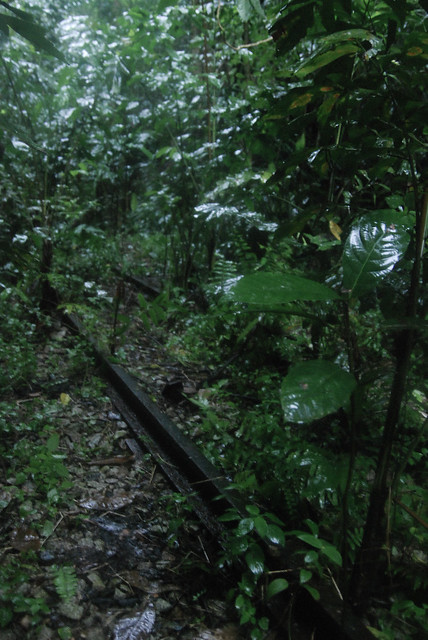
I recently went on a trek led by the Singapore Adventurers’ Club to retrace the Jurong railway line extension. It was built in the 1960s to freight supplies from Malaysia to the newly established Jurong Industrial Estate and branched out from the existing railway line just after the Bukit Timah station. By the 1990s, a declining usage of this extension led to its shutdown and this segment of the railway line was abandoned and left to be reclaimed by nature, squatters and most recently, the state.
By July this year, the railway’s station at Tanjong Pagar station will be relocated to Woodlands as part of a land swap deal between the Singapore and Malaysia governments. Now the question on the minds of many, is what will happen to the existing railway line and lands? The Nature Society (Singapore) has put up an interesting proposal to reclaim it as a ‘green corridor’, but it may already be too late.
Read about the latest development on Reclaim Land and retrace a railway now filled with the wonders of nature, forgotten communities, and memories of Singapore’s yesteryear.