Category: Culture

The brands have taken over our children’s world

As a kid, I grew up playing LEGO, specialising in the construction of spaceships. I would spend the entire Christmas night, following the instructions provided, constructing my ride out to the universe and beyond. It was only a little later, that I dared to construct things outside the book, breaking apart some of my spaceships to let my imagination run wild. For many, that is the whole point of LEGO, giving children the basic building blocks and letting them construct their own world.
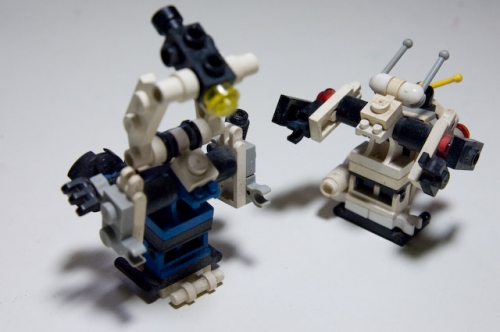
dsc_0013

Two robots I built myself many years ago

The world of LEGO today however has been taken over by big brand names — tie-ups with Star Wars, Harry Potter, Batman, the worlds that children are introduced to today are increasingly dictated as merchandise. LEGO has become just another pre-determined apparel, part of the marketing campaign of a brand to familiar children with them in the hopes of establishing a long-lasting relationship.

Not only do brands shape LEGO products, the physical shape of the brick has to bend to the will of the brands too. Since LEGO has to fashion itself to shape the brand’s products, what one sees increasingly is one-off parts that cannot really be used to build anything else. The bricks are no longer basic blocks that can be used to anything else but what it was sold as. In a sense, this limits the building vocabulary of the child and playing LEGO might simply become an exercise in the construction of the brand’s world and nothing else. Thus, when a child builds spaceships, it’ll be Star Wars ships; if it’s racing cars, it’ll probably be one you see in F1 races.

The fusion of toys with brands is nothing new and to survive in the toy industry, this may be the most viable way forward. Plus, it is not as if every new LEGO line-up is branded, but the introduction of it and increasing frequency is something to pay attention to. Moreover, the imagination of children, and even adults, is not something to be so easily stumped by what a brand dictates. And it is not as if old school LEGO did not have limited vocabulary, look at how long it took me to break out of following instructions!

In this trend, what is worrying is not just the limitation of building vocabulary but also how it is monopolised by a brand — quite in your face too. Take a walk down the aisle of the children section nowadays, you’ll see the reflection of the adult world we live in.

The Collision of Time

It is easy to assume the linearity of time, it moves forward and never returns, thus we have past, present and future. We move towards the future, implying a uni-direction to a state of things ahead of us.

But what if the future can come to us? That is, we are moving to the future, but the future is also coming towards us. In Pamela Jackson’s Sing Out Ubik, in Histories of The Future, I first encountered this idea and it really got me thinking. Now, if the future is coming towards us, it means the prospect of a future that is entirely in your own hands becomes invalid. The future is not for yours to conquer but merely yours to encounter.

With this in mind, Simon Tay’s new book, City of Small Blessings, became a delightful read for me. The story is about a retired principal who migrates to Canada and returns to Singapore and his son who had studied in Canada and settled down there. One is the past and the other is the future, and in the book they head back to Singapore and in that moment of collision the questions of alienation, memories and who this city remembers and forgets are given birth.

Students, Canada, Singapore… this book reminds me of a few friends I have in the same situation. I hope you all are doing good and may you find your place one day.

What a distracted state of surveillance

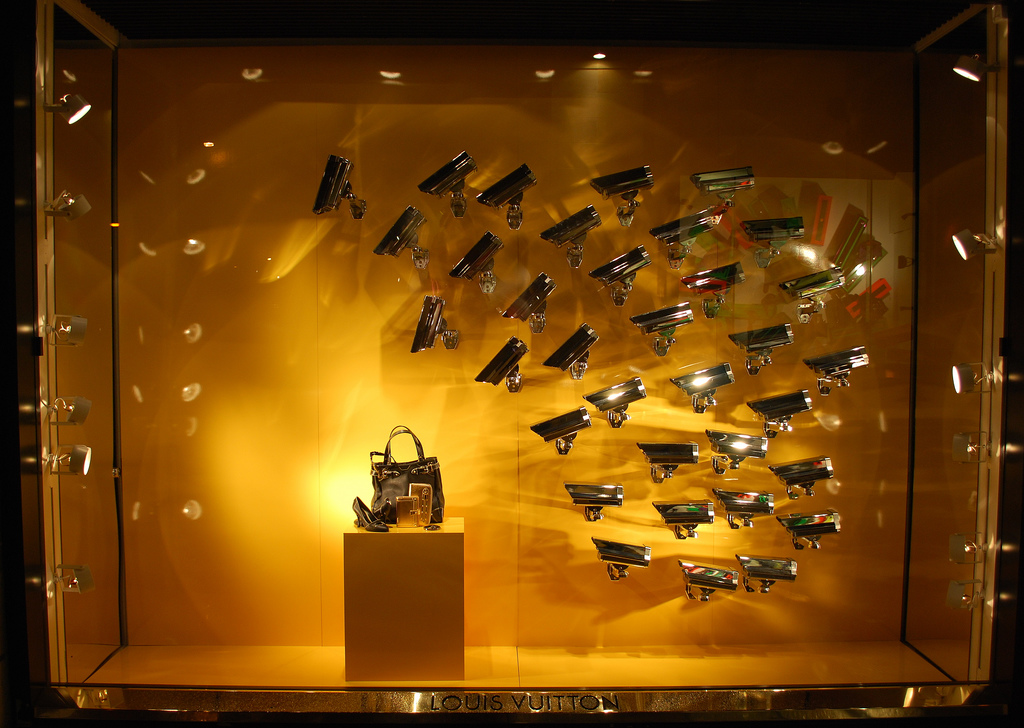
PIX: Thomas Ogilvie
This was taken in a store in London, but the Singapore stores had similar ones. PIX: Thomas Ogilvie

The state of surveillance as we have been constantly reassured is set up to protect citizens from rogue elements like terrorists and ordinary folks like us have nothing to fear. Yet the state of these security cameras in a similar Louis Vuitton shop display a few weeks ago in Singapore seems to suggests otherwise.

Instead of deflecting attention, the security cameras were shiny, calling attention to its presence and even hinting to its desirability with a sleek form. More importantly, all of them were distracted, fixated on the direction of the LV product, as if it was the only thing worth looking out for. Could it be that the surveillance state was only looking out for those who could afford it?

Just outside these displays, throngs of consumers were deep in the trance of the consumption ritual, and one saw a reflection of the state of things in this shopping space. The consumers, like mono-eyed cameras, were fixated on this high-end product, unable to see anything more than that. It seems if you were without an LV item, you were condemned to looking but never to be looked at.