Category: History

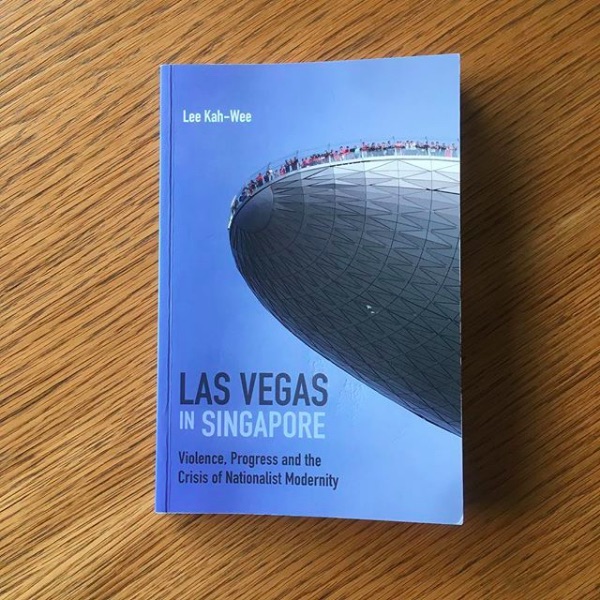
#ADesignLibrary: Las Vegas in Singapore (2019)

Amidst news of Singapore’s integrated resorts expanding, Lee Kah-Wee’s timely book on the histories of gambling in the city-state is well worth a read. Carefully dissecting the state’s efforts to control gambling in colonial and modern Singapore as well as the rise of the casino in Las Vegas, the book makes a compelling case for how a seeming act of morality is also tied to spatial politics and capitalism. There is even a juicy chapter behind the design of the now iconic Marina Bay Sands!

#ADesignLibrary spotlights lesser known design books, and invites public access to my personal collection of titles that focuses on Singapore architecture and design, Asian design, everyday design, critical and speculative design as well as design theory and philosophy. I welcome inquiries and physical loans.


When We Play: Playgrounds in Asia

The rapid urbanisation of Asia has spurred the growth of play spaces where children and communities can experience, learn and reimagine urban life. This five-part documentary series commissioned by Channel NewsAsia and created by FreeState Productions examines how play spaces impact on the communities they are built for and the urban environments they exist in. Each hour-long episode journeys through playgrounds across Asian cities, including Bangkok, Hanoi, Hong Kong, Sapporo, Seoul, Suncheon, Singapore, Tainan and Taipei.

    1. Memories and Play
    2. Community and Play
    3. Let the Children Play
    4. Play for All
    5. The Future of Play

➜ Watch all five episodes on ChannelNewsAsia

When Design Met Technology

Two pioneer designers recall how they rode the digital wave in the eighties and nineties when Singapore took great strides to become an IT Nation   

From CD-ROM to CD Bomb

Ching San (centre) with his partner, Gim Lee (left) and their staff at Octogram’s offices in the 1990s.

Once a beaming object of tomorrow’s technological future, the CD-ROM is more likely to be found in a kopitiam today, hanging as a shiny prop to scare birds away. The rise and demise of this medium also reflects the story of Lim Ching San’s design consultancy.

In the mid-nineties, Octogram rode on the incoming Information Technology (IT) wave to become one of Singapore’s earliest multimedia publishing houses. Working with clients ranging from government agencies to the creators of the then popular local comic, Mr Kiasu, Ching San and his team integrated texts, images, videos and games into CD-ROMs to tell their stories on a computer. This was supposed to be the future of publishing, he says, pointing to a yellowed photocopy of a 1993 New York Times article titled “Books will give way to CD-ROM, say experts”. But as the story goes, CD-ROMs died in a matter of years when Singapore plugged itself into high-speed internet at the end of the millennium.

“The whole business bombed, and all my publishing business was gone!” recalls Ching San who ran Octogram for close to two decades until closing it in 2002 because of the CD-ROM flop and the dot-com bubble burst then. “When you talk about technology, you can be right at the peak, and the next moment you can fall.”

Read more