Category: Cities

Beyond An Art Destination

An empty Gillman Barracks on a rainy Tuesday afternoon reminded me of its struggles. Last year, 5 of 13 art galleries left this contemporary arts destination in Singapore, prompting questions about its future.

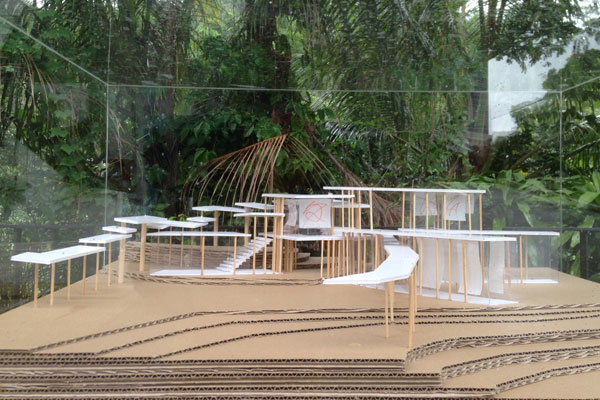
One answer was in the showcase I had come to review. Dwellings at Gillman: Homes for Artists and Researchers is a month-long display of speculative residences for the enclave – an imaginative alternate vision to its current setup of art galleries and restaurants.

Installed across four locations along the sheltered walkway of Gillman Barracks are 12 site-specific architectural models that came out of a workshop led by Roland Sharpe Flores and Dr Lillian Chee of the National University of Singapore’s Faculty of Architecture. Over five months, the duo led second-year undergraduates to seek out the “essence” of this former British army barracks and express it in residences that ultimately seek to “create an inclusive, nurturing ecosystem for the Singapore artistic scene.”

Read the rest at IndesignLive Singapore

Blank Slate

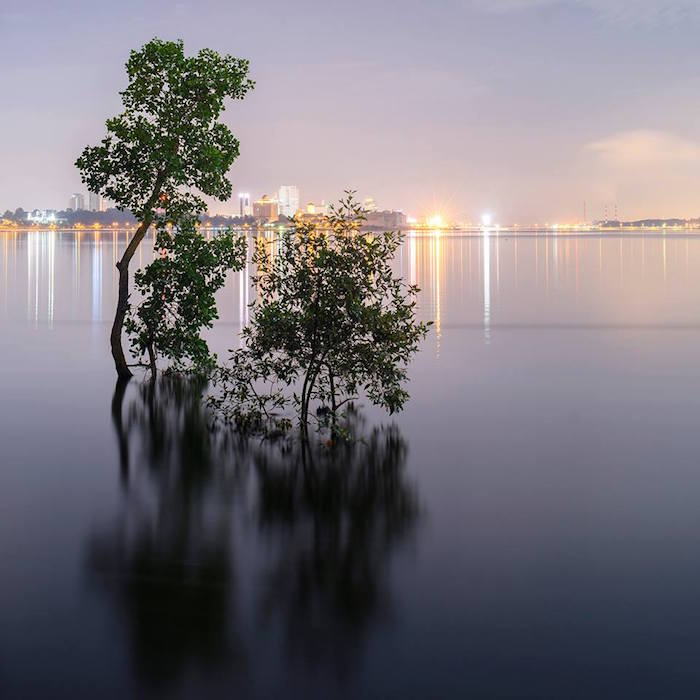
Mangrove, Kranji Park | PIX: DARREN SOH

To chance upon a pocket of space in land-scarce Singapore is to have fortuitously arrived at an in-between moment in the city-state’s relentless urban march—a pause after something was demolished; a pause before a construction site emerges.

In that moment, the land is emptied but not empty. The urban fabric has opened up a space for contemplation: to think outside the boundaries of a city so neatly delineated by its state planners and real estate developers. As Singapore builds itself up to house a projected population of 6.9 million people by 2030, such temporary voids offer us a momentary frontier of possibilities, before they become concretized as urban structures again.

Read the rest at Design Observer

Architect in Profile: Alfred Wong

In the years leading to Singapore’s independence, Alfred Wong and other young architects founded what became the Singapore Institute of Architects (SIA) to empower local practitioners and educate society about the architecture profession.

Over five decades on, with the architecture profession well established locally, the 85-year-old has embraced the global market and built up a successful multinational practice that works on projects from around the world out of its two offices in Singapore and Chengdu.

Such foresight has helped Wong successfully grow his practice since starting it in 1957, just four years after graduating from architecture school in Melbourne, Australia. It has also made him a pioneer in Singapore’s design history. Besides laying the foundation of the profession as a founding member of SIA, Wong also advocated for architecture training to be transferred from the polytechnic to the university, and successfully delivered some of the country’s earliest modern buildings against a backdrop of decaying shophouses and traditional kampungs.

Read the rest at IndesignLive Singapore