Category: Design

Negotiating ads through design

The New York Times (NYT) latest decision to sell display advertisements on its front-page raised a few eyebrows in the journalism world as it was seen by some as a commercial intrusion into the most sacred space of newspapers.

However, in Singapore, this has hardly been the case. In 2006, The Straits Times (ST) started selling the section cover pages (except its cover page) and it has always sold the kind of ads that the NYT so recently embraced.

And if one looks even further back in Singapore newspapers, cover pages filled with ads were the norm. Here are the cover pages of the former The Singapore Free Press and The Straits Times from 1932. singapore-free-press-19322st11932

Ads play a big part in determining newspaper design, especially in ST. In my time there, the news pages always came to the designers with the ads already fixed on the page. The job of the designer was to place the news in reaction to the constraints.

Since advertisements are sold at fixed sizes and rates, the space for design is usually just a inverted L-shape that limits the possibilities of experimentation as compared to a full blank page. In fact, how often do you see a news page on ST without ads?

Not only do ads constrain the amount of space for news design, the scope for design is limited too as it has to keep itself plain and simple in relation to ads that are usually fanciful.

And this is why I think pages on ST turn out looking very predictable as compared to newspaper designs that I love like Financial Times that have much less ads to contend with.
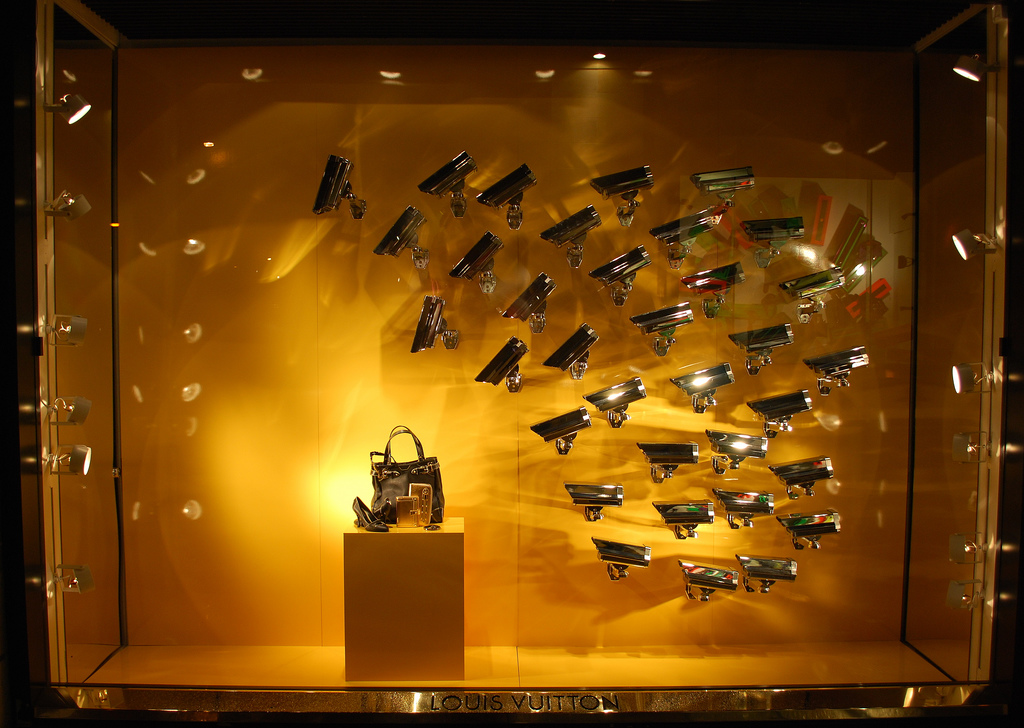
What a distracted state of surveillance

PIX: Thomas Ogilvie
This was taken in a store in London, but the Singapore stores had similar ones. PIX: Thomas Ogilvie

The state of surveillance as we have been constantly reassured is set up to protect citizens from rogue elements like terrorists and ordinary folks like us have nothing to fear. Yet the state of these security cameras in a similar Louis Vuitton shop display a few weeks ago in Singapore seems to suggests otherwise.

Instead of deflecting attention, the security cameras were shiny, calling attention to its presence and even hinting to its desirability with a sleek form. More importantly, all of them were distracted, fixated on the direction of the LV product, as if it was the only thing worth looking out for. Could it be that the surveillance state was only looking out for those who could afford it?

Just outside these displays, throngs of consumers were deep in the trance of the consumption ritual, and one saw a reflection of the state of things in this shopping space. The consumers, like mono-eyed cameras, were fixated on this high-end product, unable to see anything more than that. It seems if you were without an LV item, you were condemned to looking but never to be looked at.

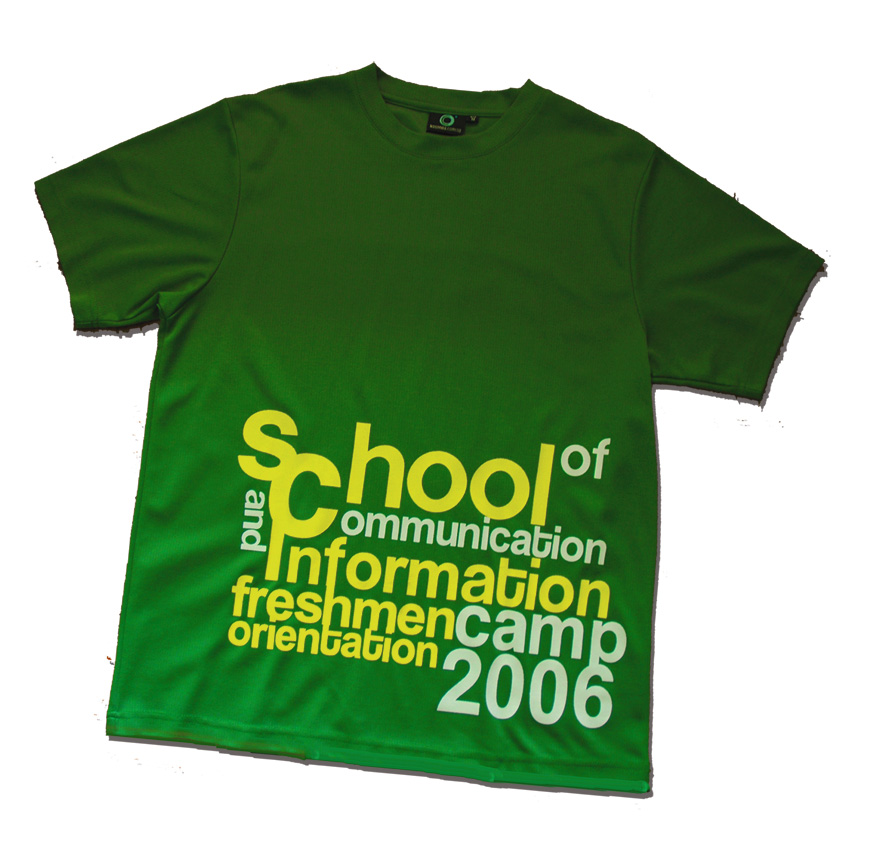
SCI Freshmen Orientation Camp 2006

foctshirtactualfocslippersfoctshirt-1

The t-shirt was given to all the students who joined the camp and was printed on sports-friendly material as the students were expected to be having a lot of activities under the hot weather. An element of customisation was also added to the back of the t-shirt so that the students, who were all new to one another, could more easily distinguish themselves.

The bottom left corner is a illustration of the gift, one side of an over-sized slipper that alluded to the fairy tale of Cinderella, that each student received to entice them to join the camp. It was enclosed in a brown paper bag that contextualised the gift in case people found it offensive to receive a slipper. The paper bag also doubled up as a container for sponsor advertisments.