Category: History

1980s: Sowing the seeds of SG graphic design today

These messages of a graphic design educator to his graduates suggest how Singapore design has developed since the 1980s.

Working outside of advertising agencies, producing conceptually-driven work and packaging local products to sell overseas — these are what many Singapore graphic designers do today.

They are also what one Singapore graphic design lecturer urged his students to do some three decades ago at the Nanyang Academy of Fine Arts, one of only three design schools that existed in the city during this time.
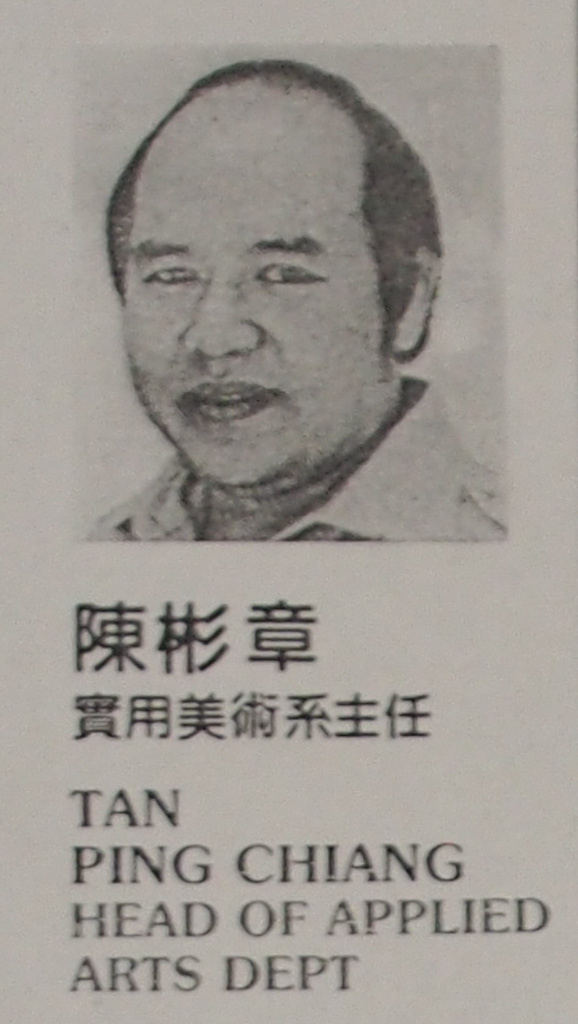
Tan Ping Chiang (1984/85)
A photo of Tan in the 1984/85 annual.

As head of the academy’s applied arts department, Mr Tan Ping Chiang (陳彬章), penned messages in its graduation annuals that outlined the role of Singapore graphic designers in the ’80s. In the midst of Singapore’s second industrial revolution in 1980, the former NAFA fine arts graduate urged the academy’s students to look for work beyond the narrow confines of advertising as “agencies were not the only way out” (“廣告公司並非唯一的出路”). Like how he worked as an in-house designer for the government, graphic designers could apply their skills in other sectors of the economy, and mirror the nation’s shift then from labour-intensive industries to those that of high value-added and wages.

To the graduates of 1984, he further elaborated on how this economical shift was changing what employers and clients expected of designers. Summing it up as “We Pay For Your Idea”, the designer who had worked and obtained his diploma in graphic design in England for six years from 1966, stressed the importance of “ideas” and “creativity” and not just craft and skills for the contemporary designer.

Dress-Up-Our-Local-Food-Products
Tan’s message for graduates in the 1981 annual.
We-Pay-For-Your-Idea
In 1984, Tan outlined the importance of “creativity” and “ideas” in contemporary design.


Tan had a particular interest in food packaging, and once urged the academy’s graduates to “Dress up our local food products”. Design could help such products sell better in Singapore and overseas, although he cautioned against creating packaging that simply imitated either the west or Japan. Later in life, he wrote a thesis on the value of food packaging in Singapore for his Master of Design from the University of Western Sydney and also illustrated Singapore Delicious and Delirious, a visual tour of the city’s food culture.

This love for food and design has spread to his industrial designer son, Tan Lun Cheak. As one of the founders of design collective Little Thoughts Group, Lun Cheak has created several products that reflect Singapore’s food culture including a steamboat that is also a lamp, and a plate that aids the tossing and turning of the traditional Lunar New Year dish of Yusheng, an act which symbolises good luck and prosperity.

The elder Tan, who turns 73 this year, is now working on his art works and blogs regularly about his travels.

How People and Time Can Save Bad Design

national_library1n

Try calling the old National Library a “monstrous monument” and “a picture of total failure” today, and one can only imagine the uproar it will cause amongst nostalgic Singaporeans. But that’s exactly what architect William Lim and others of his generation had to say about this now extinct building after it was unveiled in 1960.

“A visit to the inside confirms without any doubt the complete and absolute failure of the architect to create the necessary atmosphere and delight for both the readers and the library staff.” — William Lim (1960)

“Aesthetically, the design and exterior materials used, which are in juxtaposition to the soothing, pleasing National Museum, constitute what might be harshly termed a major architectural abortion.” — Cecil K Byrd (1971)

Similar sentiments were shared when the government announced in 1999 that the library would be demolished  to make way for the development of the Fort Canning Tunnel. The Urban Redevelopment Authority felt the library did not deserved to be conserved because “it was not of great architectural merit”.

But the outpouring against the library’s demolishment and declarations that it was a national icon shows how insignificant design is when compared against how it was used by people and remembered over time. While the criticisms of its architecture are fair and justified, but in this instance, those who supported the library’s conservation  saw its value beyond architecture.

WIKIMEDIA / SENGKANG

This also explains the struggle with buildings like Golden Mile Complex → ,in which sentiments are reversed —  the architecture community thinks it is a gem, but the public find it an eyesore because it is seen as a home for a foreign community.

Granted that the quarrel is not about the criteria to assess design, but rather what is the value of a building. However, should our critiques of design be purely based on its design? Or should it be broadened to include non-design factors, in this case its value as a piece of Singapore’s social memory? Even so, there is also the question if such feedback be meaningfully incorporated into a design process or practice.

One recent project that addresses some of these issues is FARM’s effort to remember the National Stadium through “bench“. Designers were given old planks of the stadium seats to “recapture and rethink this piece of memory” of the stadium. The result are 30 benches inspired by the stadium’s architecture, its role as a sports centre, and also a community space. Most of the pieces are visual translations of these messages, and often at the expense of the seating experience. The designs also turned out looking rather similar, which could either hint at how narrow the brief was or how unifying the National Stadium was as a memory.

A side project of bench, WOOD, was much more interesting. Hans Tan led a design studio where 18 students from the Division of Industrial Design explored the materiality of the planks and essence of the stadium to greater detail. Freed from the need to create piece of furniture, the students pushed the experience of memory beyond visual objects and instead engage other senses such as smell and interaction. Do check out the exhibition of their works  in The URA Centre till 31 May 2013.

Less Structure, 
More Substance

FROM UNIT EDITIONS
FROM UNIT EDITIONS

Best known for having created the First Things First manifesto, one of the earliest documents that outlined the existential problem of a graphic designer in the modern commercial world during the 1960s, Ken Garland is undoubtedly one of Britain’s most significant graphic design thinker.

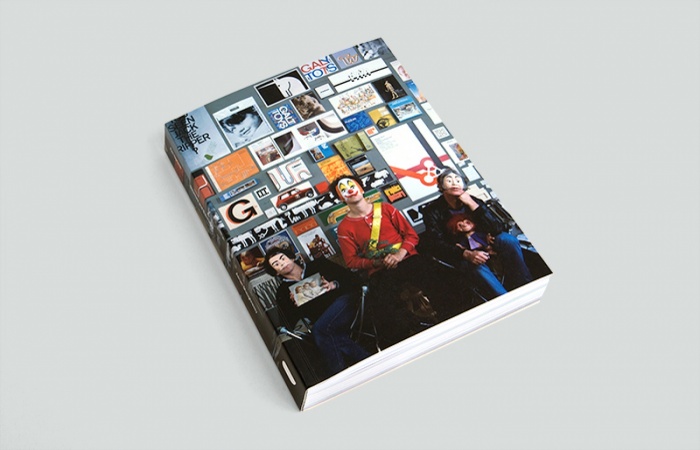
But lesser known is Garland the graphic designer, which is what Shaughnessy attempts to address in Unit Editions’ recent book Ken Garland: Structure and Substance. This 323-page monograph showcases Garland’s work over the last five decades, from 1952, when he was a student at the Central School of Arts & Crafts till the year 2009, when his independent studio Ken Garland and Associates was over forty years old.

The bulk of the book is a visual compendium of Garland’s significant works, but it is also accompanied by his photo works as well as indexes of the designer’s extensive published writings and lectures. While many of these are also available in Garland’s personal website, what makes the monograph truly comprehensive is a 65-page biography of the man who wears many hats (literally, as Garland is never seen without one of his iconic embroidered hats).

Shaughnessy’s straightforward approach to the multi-faceted Garland is to separately present each of his roles — as a graphic designer, studio owner, ethical advocate, political activist, writer, teacher and photographer. Each section details the historical context, an introduction to Garland’s significant contributions in the field, the man’s retrospective recollections, as well as the opinions of peers and associates. Read together, the biography paints the picture of Garland as a “man of substance”, a designer who is much more than about the work he produced, but a human being whose values deserve respect.

The book does a good job of tracing Garland’s roots and early life, giving readers a glimpse of what shaped the man we know. From leading a sit-in at art school to fight for life drawing classes and his conscription into the Parachute Regiment as military service, one begins to understand why Garland has a strong sense of mission and militaristic character.

The highlight of the book comes in the sections about Garland’s graphic style and philosophy, as well as features of his early works for the British trade journal Design and the children’s toys company Galt Toys. Readers are introduced to Garland’s belief in integrating image and text in his covers for Design, and they can see the depth of thinking in his approach for Galt Toys, a two decades long association best exemplified by the logo he designed, which was unconstrained by the popular rigid rules defined by corporate design manuals in the 1960s.

Beyond these pages, however, the essay begins to suffer from the structure of Shaughnessy’s approach. In comparison to what has come before, the sections on Garland’s different roles are summary, often lacking in details and purpose, which either speaks about the author’s lack of interest in these areas or his interviewee’s lack of substance in them. By sticking too closely to the structure of examining Garland’s different roles, the opportunity is also a missed in exploring how the different roles informed one another. How did Garland as a photographer or writer inform his design approach? The connections are mentioned in brief, but it seems Garland was not questioned about these relationships.

Another missing point of interest in the biography would be Garland’s writings on design that were compiled in a word in your eye, a book published in conjunction with an earlier retrospective exhibition of his work put up by The University of Reading in 1996. How has Garland’s views on design changed over the years and why so?

As with many monographs, this book is of a celebratory nature and does not take on some of the more thorny topics of the subject. It is clear from the output compiled in this book that after two decades of being in business, the designer started to lose his relevance from the ‘80s. Shaughnessy does highlight this point as well, attributing it to the changing times and tastes. But what did the man think of his work in relation to that period? Why did he stick to his core principles instead of adapting his studio?

By asking Garland more of such critical and challenging questions, the designer would have the opportunity to hit back, and truly establish himself as someone of substance — even in contemporary times.

——————

This review was originally written for a graduate programme application.