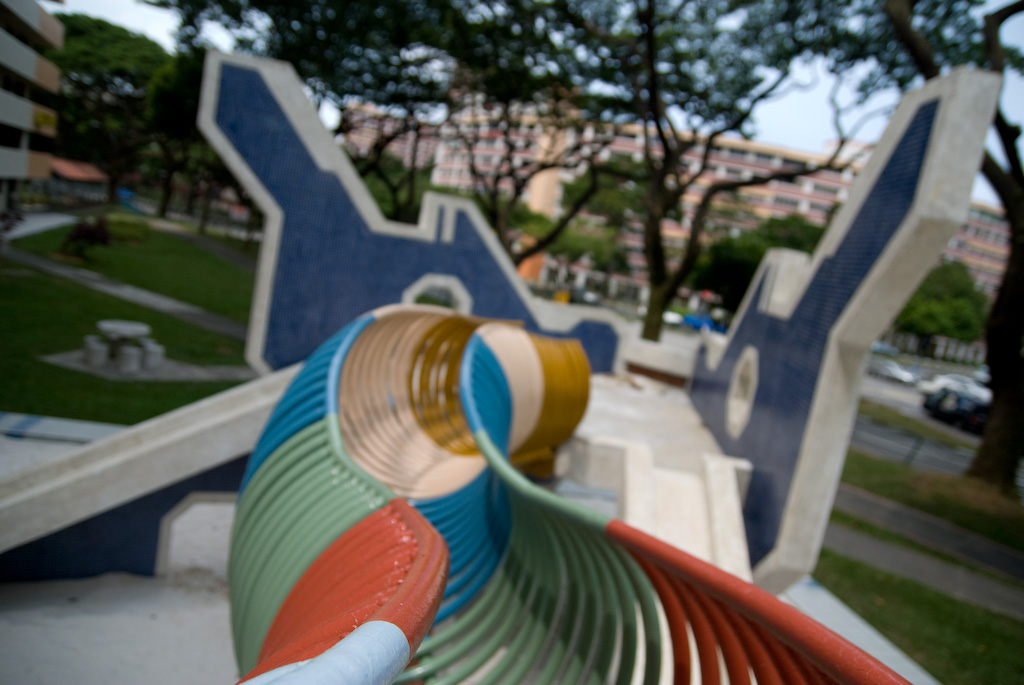
In 1971, the Baharuddin Vocational Institute (BVI) was officially opened after moving to its new permanent campus in Queenstown.
“In this way, our Republic will some day be able to depend entirely on our own designers and craftsmen in advertising, handicraft souvenir, fashion, woodworking and printing trades,” said Home Affairs Minister Dr Wong Lin Ken who officially opened the school.
When it began operations in 1968, BVI was the only place in Singapore that provided training in manual and applied arts. The school had a printing school, woodwork department, fashion department, handicrafts department, and a graphic design program — then known as commercial art — which would become its biggest and most popular in years to come. The only other art school then was the Nanyang Academy of Fine Arts which concentrated on fine art and only came up with a graphic design course in 1975.
For the next two decades, BVI was the main institution that helped give birth to Singapore’s graphic design scene. Eventually,the entire applied arts department moved to help establish the graphic design program in Temasek Polytechnic.
After a chance encounter with a former BVI lecturer, I began a journey to document the history of this school that played a huge role in Singapore’s graphic design scene then. If you happen to have taught there, studied there, or know anything about it, drop me a line at justin [at] justrambling.sg.