Category: Culture

Defining the Roots of Japan(s)

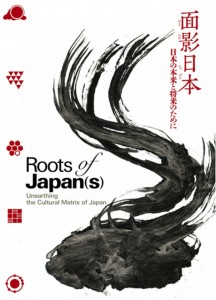
If you’ve ever wondered about what makes Japanese culture unique, this brochure Roots of Japan(s): Unearthing the Cultural Matrix of Japan tells it all. Published by Japan’s Ministry of Economy Trade and Industry, this publication marks a shift in how the country promotes its creative industries, from its previous “Cool Japan” to “Creative Japan”. The aim: to communicate to Japanese and the world its unique brand of culture.

The book establishes the notion that Japan is made up of diverse cultures and briefly traces their history. What comes out of these lyrical pages edited by the Editorial Engineering Laboratory (a research institution “providing pilot models for the information age“) are exciting connections of Japan’s past, present and future. For instance, cosplay, an act of representation to bring a fantasy world to life, is traced to Japan’s Byobu screens, which once carried images of Chinese landscapes to the country’s hotel lobbies and banquet halls.

Besides outlining distinct Japanese traits, the book also theorises how its culture is generated, giving extremely fascinating insights to Japanese philosophies. Tarako (cod roe) Spaghetti, an Italian dish unique to Japan, is an instance of the trinity of concepts Shin-gyo-so, which are three basic styles of calligraphy that represent formal-casual-punk. As explained in the book:

“The pasta is cooked al dente, following the shin (authentic) Italian method, and sprinkled with dry seaweed according to the Japanese gyo (way). Eat with chopsticks rather than fork, and you’ll be so (grass) in style.”

Roots of Japan(s) was given out during the recent Asia-Pacific Economic Cooperation meetings in Bali, and there’s no information if you can get them anywhere else. However, you can hear the laboratory’s director Seigow Matsuoka talk about this book at the recent Creative Tokyo event website (with a voiceover in English translation; start from 22:40). You can also look at images of the book and read notes in Japanese about it here and here.
Independent Musings

Not been able to ramble as much here as I used to because I’ve been busy writing for other publications. As a writer, you’re always happy to be published by others because it’s an affirmation that your work is in demand (at least by editors, not sure about readers). But at the same time, it means having to compromise to other peoples’ agendas and not being able to tell stories or bits or parts of it that matter to you or audiences other than those wanted by publications.

A quick round-up of what I’ve been up to thus far:

  • Contributed a small piece about “Danger-Keep Out”, a sign around this city that has fascinated me for some time now
  • Interviewed the photographer Nguan, whose dreamy pictures makes you take a second look at the world around you
  • Running FIVEFOOTWAY, a magazine about Asian cities. It’s been crazy, but fun figuring out how to run something digitally and figuring out who we are. We’re involved in two events this weekend: YAL Mash-up and Surprise Stove
  • Getting back to reporting and covering the ground with Wall Street Journal Scene Asia, most recently with a write-up on A Design Film Festival. I did a story on Old School too, but not sure why it’s not up yet.
  • Editing the commemorative book for the President’s Design Award
  • Working on the fifth issue of The Design Society Journal. I think the magazine’s been around enough such that we’re starting to get a line-up of contributors!
  • Finishing up the book on the history of graphic design in Singapore, INDEPENDENCE: The history of graphic design in Singapore since the 1960s

There have been several things on my mind that I’ve yet to find the time or an avenue to cover. Hope to get them off my mind (and chest) before 2012 arrives!

“Danger: Keep Out!”—Remembering a Safer Singapore

Danger 1 (JZ)

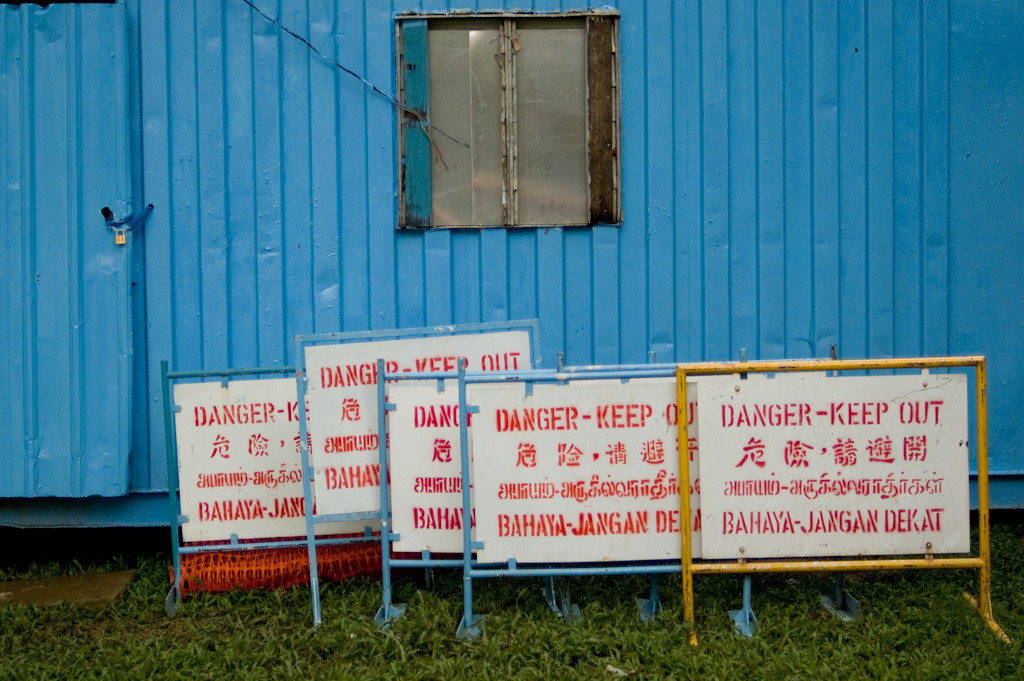
There’s red, there’s white, and it even comes in English, Chinese, Malay and Tamil. All this in a rectangular board about the size of a flag. The “Danger-Keep Out!” sign is how I remember my Singapore, a ‘flag’ representing the visual culture that surrounds us in this city.

You can find it all around in this city, which is perpetually in construction or undergoing some makeover. As long as something is being built, serviced, or torn down, this simply designed sign helps to keep Singaporeans safe by communicating to us that there’s dangerous work going on behind it, and we should keep our distance.

To make sure everyone in Singapore gets this message, it is repeated in the country’s four official languages. This equality extends to even how each line is spaced out so that they look equally long, regardless of language. And even if you don’t understand any of the languages, seeing four exclamation marks on a single board should surely tell you something is amiss.

This sign is functional and without frills, just text on a blank board in a single colour. But it isn’t just the design that reminds me of Singapore, how it is created bears the hallmarks of this city’s love for efficiency and its approach towards many things. The look of the letters suggest a pre-designed template is used to manually produce identical copies of this sign quickly without compromising quality.

Ironically, as Singapore continues to develop and re-construct itself, even this “Danger-Keep Out!” sign has not been spared. Nowadays, with technology, these signs are produced by digital printers that replace craftsmanship with machine precision. Sometimes, this is taken to its extremes, such as construction sites with ‘Danger-Keep Out’ signs printed in A4-size and kept in plastic sleeves!

Slowly, but surely, such signs are also being replaced. Instead of construction sites fenced with empty walls plastered with “Danger-Keep Out!”, carefully designed walls displaying what is being constructed are increasingly common. It’s a reflection of a more “designed” Singapore, but also how open we have become. We don’t just care about function and safety, but also spend a little more thought and money to be inviting and informative. Instead of keeping people out from a future that is being built because of the overriding concern for safety, the new signs promise and invite them to be a part of it, visually at least.

But what will happen to the “Danger-Keep Out” sign that I remember? Here’s an interesting take by Singapore graphic design studio Bravo Company. They re-appropriated this sign that they thought was being ignored by Singaporeans, who had become so used to seeing construction sites. After the General Elections in May, they used these warning signs to spread words of encouragement instead.

“I think the sign is an understated symbol of Singapore. We are the only country in the world that has the need to display all important messages in four different languages,” said its co-founder Edwin Tan.

How an everyday visual symbol, originally intended to be functional, becomes an icon, is an example of how inspiring our own heritage can be. It also shows how what we see around the city — all that is designed and built — can also become markers of memories. And that these collective memories are constantly re-interpreted and used in the present reminds us of how much we’ve constructed as a nation, and that this journey of remembering never ends, but only evolves with each generation.

———–
Written for Singapore Memory Project’s iremembersg.