Category: Culture

Your Singapore Icons

Our highly-tamed national lions are increasingly being used as canvases by artists. Is Singapore really loosening up and letting them into the wild?

It may be YourSingapore, but not your Merlion. While the Singapore Tourism Board (STB) website encourages you to create your own version of Singapore, try using the Merlion symbol (or even a close representation of it) without permission and be prepared to be fined up to $2000 or even jailed for six months.

Other than the state flag and crest, the Merlion is the only Singapore symbol that receives such heavy protection from the authorities. Created in 1964 as the tourism board’s corporate logo, the Merlion became a “Singapore symbol” eight years later when a close to eight metres tall statue was installed at the mouth of the Singapore river. The hope was that the Merlion would come to represent this island “just as the Eiffel Tower is identified with Paris.” This has since led to this part-fish part-lion becoming a symbol of all things Singapore to tourists, appearing on T-shirts, keychains and even chocolates. By setting itself as the national icon, it has also become a lightning rod for artists dealing with the Singapore identity — and was itself struck by lighting in 2009, damaging its luscious mane.

Read the rest at POSKOD.SG

Elections Posters: The People’s Version

With the advent of image-editing tools like Photoshop and the ease of finding images online, Singaporeans have created some very interesting visuals to express their views on the General Elections this year. Here’s a sample of some I’ve found so far:

Remiser Tan has retold the elections via the Chinese wuxia classic《倚天屠龙记》The Heaven Sword and Dragon Saber:

Nicholas Lim has remade Hollywood and Chinese blockbuster movies to dramatise the opposition’s cause, very apt choices, I must say.

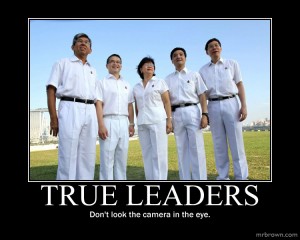
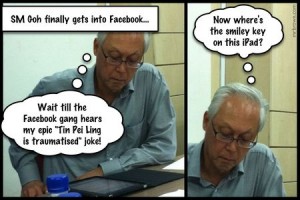
Mr Brown has also translated his satirical voice into visuals, making use of the form of motivational posters and comics (click to see the actual posts)

So far, I’ve yet to find any self made posters supporting the PAP’s cause. I suppose most people think the party has more than enough resources, so why bother?

Here are also two websites that have been producing a body of political cartoons about Singapore, a rare find these days. Check out Joshua Chiang’s The Dunno Cartoons and Ben Soon’s Spore Says Political Cartoon.

Finally, if you’ve come across any self made election visuals that I’ve yet to feature, do share them here!

Is Design Only For The Rich?

To many people today, something that is “designed” is more expensive and above what the common man can afford. Think about how we refer to “designer jeans” as opposed to just “jeans” — there is something extra on top of the necessary. Such a notion of design has also been expressed by then Prime Minister Lee Kuan Yew during first-ever International Design Forum held here in 1988.

“Good design is more than just pleasing to the eye. A functional, elegant product can be cheaper to produce and sell for a better price, because it is of greater value to users.”

A question here is, what exactly is good design’s “greater value to users”? One value here seems to be “symbolic status”. I was reminded of this during a conversation with a stranger who complained that there is a lot of bad design in Singapore “even though she lives in the good part of town”. (I vaguely remember it as the Orchard/Tanglin area or something to that effect). In other words, this lady was suggesting that “good” design is to be expected for those who can afford it, while “bad” design is more forgivable for those who can’t.

This equation of good design with luxury  is also how many products differentiate themselves not only from one another, but also justifies why they cost so much more than items of similar function but are not “designed”. But is good design exclusive to luxury and should it always be of higher monetary value? While it raise the profession’s economic value, it also makes design exclusive and detached from public life. Perhaps one of the biggest challenge in growing a design industry anywhere is how designers don’t end up just serving those who are willing to pay for it. If not, design will just be a communicator of status and symbol — just pleasing to the eye.