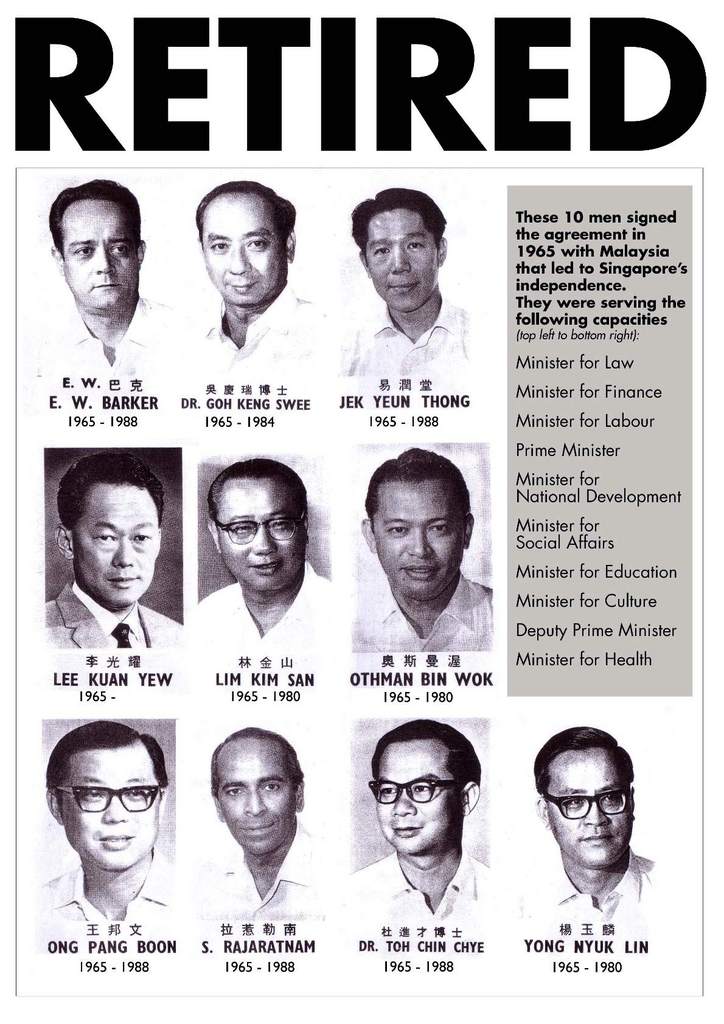
Don’t believe everything you see.
What is history?
It connotes some kind of “official” account of a past that is often seen as “the truth” because it has been verified by historians who practice certain methods that help to determine its validity.
This is probably the single defining factor that distinguishes “history” from two other accounts of the past — “memories” and “myths”. The former suggests a past that is much more personal and anecdotal, often presented without the rigour of verification associated with history. “Myths”, while also usually anecdotal is additionally tinted with a layer of incredulity that suggests it was failed history.
Accounts of the past can be broken down into an objective component and another that involves interpretation. What is often regarded as objective would be artifacts or information that can be verified. However it is the issue of interpretation that is often forgotten but is a thread that runs through all the three types of accounts. For every primary document or artifact, its use and significance can be interpreted in a multitude of ways. So the whole process of becoming history is left to “official” people such as historians who employ “objective” methods to define “history”.
In this sense, “history” is really fabricated by who writes it, and that being the case, “history” as the holy grail of “truth” diminishes in significance. Moreover, “memories” and “myths” often do not make it as “history” not because they are not true, but because the nature ofbeing history is the need for tangible evidence that may no longer exist today.
Thus, a much more holistic understanding of our past is to accept history, myths and memories as a package rather than choosing one over the other. It is also what might make the past more relevant and interesting to us all.