Category: History

#ADesignLibrary: 石汉瑞启蒙者 (Henry Steiner: Graphic Communicator) (2019)

Before design became globalised, some practitioners advocated for a cross-cultural approach that combined modernism’s international ambitions with local sensibilities. 石汉瑞:启蒙者 (Henry Steiner: Graphic Communicator) (2019) brings together the works, essays and interviews of one such trailblazer. The Vienna-born Steiner brought the modern graphic design principles he learnt from Paul Rand in New York to Hong Kong in the mid-1960s just in time for the city’s economic takeoff. By playing off cultural opposites of West and East, he showed one way modernist design ideas were adopted and adapted in Asia. While Steiner‘s works have been published in English, this comprehensive collection, edited by 何东, is entirely in Chinese and introduces him to a new generation and geography. It was published for a 2019 Steiner retrospective curated by designer He Jianping (何见平), who also designed this book.

#ADesignLibrary spotlights lesser known design books, and invites public access to my personal collection of titles that focuses on Singapore architecture and design, Asian design, everyday design, critical and speculative design as well as design theory and philosophy. I welcome inquiries and physical loans.
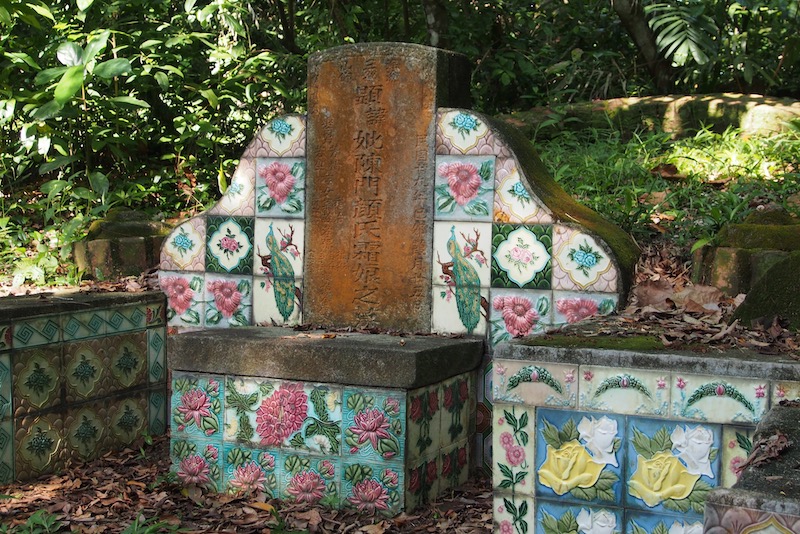
Discovering Singapore’s Heritage in Old Tiles

You will find them on bathroom walls, apartment floors and even on the facades of buildings. However, few would expect to encounter tiles in the cemetery. Artist Jennifer Lim was surprised by the colourful floral tiles that adorned her great-grandfather’s tombstone when she visited Bukit Brown Cemetery in 2012 to witness its exhumation.

The Australia-born had just moved to Singapore that year to learn about her Singaporean father’s Hokkien-Peranakan ancestry. As Lim retraced her family history in the city-state, she encountered similarly intricately designed ceramic tiles at the family’s shophouse in Chinatown and the nearby ancestral temple that her great-grandfather helped to found.

“With every place connected to my ancestors, these tiles would be like, ‘Hi!’,” recalls Lim.

➜ Read the full article in What’s Up (February 2020)

30 Years of Conservation: A Lifelong Commitment

Conservation is a lifelong commitment, says Dr Richard Helfer who still has a soft spot for his first conservation/restoration project – Raffles Hotel.

Walk past Raffles Hotel today and one is struck by its grand façade with a welcoming cast-iron portico that harks back to the early 20th century. But what completes this historic view along Beach Road are four vintage street lamps in front of the Grand Old Lady of Singapore.

“We specially brought them in from Charlottenburg, Berlin, as part of the conservation, restoration and redevelopment of Raffles Hotel and Arcade from 1989 to 1991,” says Dr Richard Helfer.

“We had these conceptual models (of the hotel) and we knew what the front would look like… yet we thought that something did not look right,” recalls Richard. He oversaw the project and Raffles Hotel for 14 years as Founding Chairman and Chief Executive Officer of Raffles International Hotels & Resorts and Executive Director and Chairman of Raffles Hotel.

Typical modern street lights would not fit what he and his team expected to become “the most photographed view in Singapore”. Armed with an early photograph of the hotel showing the desired street lamps, Richard went hunting for lamps similar to those that once stood outside of the hotel at the turn of the century and located them in Berlin.

He had to convince the German city’s mayor to sell four of the lamps, which up to this time were restricted to his city and then seek approval from the Public Utilities Board in Singapore to make an exception.

The lamps were not required by the conservation guidelines for Raffles Hotel. However, Richard went through all the trouble because he was convinced that such details in the immediate streetscape were important in contributing to the aura and experience of Raffles Hotel.

“When you do proper conservation and restoration of a building, you need to have a clear vision,” he says. “Our goal was to create something that Singaporeans and visitors could experience as an important relevant component of the history of Singapore and a national icon for Singaporeans to be proud of.”

➜ Read the full story in 30 years of conservation in Singapore since 1989