Tag: Singapore Design

From Craft to Industry: Reflecting on Histories of Making in Singapore

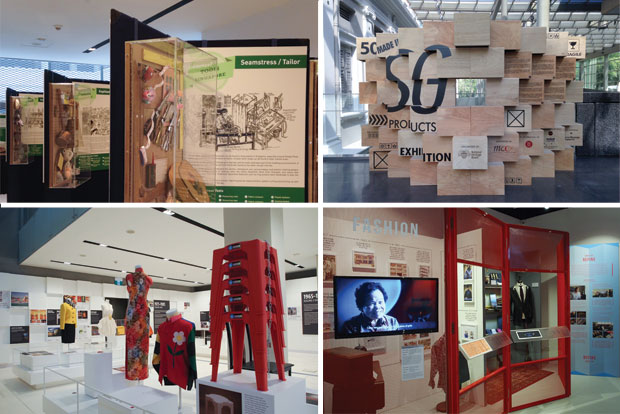
Four exhibitions retracing Singapore's craft, design and manufacturing history (L-R): Tools That Built Singapore, Made in Singapore Products, FIFTY Years of Singapore Design and Craft | Singapore.
Four Exhibitions (L-R): Tools That Built Singapore, Made in Singapore Products, Fifty Years of Singapore Design and Craft | Singapore.

“Made in Singapore” has always been a challenging term for Singaporeans. Manufacturers grumble about the high costs of labour and land here. Designers lament the lack of expert collaborators willing to experiment and innovate. Consumers complain about paying a premium for local products that are no better than overseas imports.

Four on-going exhibitions in Singapore coincidentally retrace the nation’s history of making, offering an opportunity to understand and reflect on some of the issues that plague craft, design and manufacturing in the city-state today.

Read more

Architecture & Design Publishing from Singapore: Some Hard Truths

I was invited to speak on the topic of local publishing at Allscript x Comman Man Coffee Roaster’s “50 Titles” event last weekend. Yanda of Do Not Design selected for this event 50 examples of contemporary local books and magazines. Below is my response, a presentation on some of the titles and what we can learn about designers expanding their role in Singapore’s publishing scene.

I recently moved back to Singapore from New York. One of the things my girlfriend noticed was how difficult it was to pack my collection of architecture and design books into shipping boxes. Anyone who buys them knows how this genre of books come in all shapes and sizes, and seldom fit neatly into a box. In a sense, design books tend to emphasise a quality of difference, and I hope to explore this element in my presentation on contemporary architecture and design publishing from Singapore.

A few years ago, I fully immersed into the subject of Singapore design when I was commissioned to retrace the history of graphic design in this country. This resulted in my book, Independence: The history of graphic design in Singapore since the 1960s, which chronicles the evolution of the profession over the last five decades.

As a journalism graduate, one thread that attracted me while researching for this book was the rise of independent publishing in Singapore. From the mid to late 2000s, designers were putting out a trickle of local books and magazines, including Underscore, Brckt, The Design Society Journal, and kult. The periodical Singapore Architect had also just undergone a revamp under Kelley Cheng of The Press Room. Incidentally, this issue (#287) is her last as there is a new team coming on.

Designers who traditionally came at the end to give form to a publication are now creating the content, either by themselves or commissioning writers. It isn’t entire new nor unique to Singapore, but there is certainly a new generation of local designers who are putting together niche books and magazines all by themselves instead of trying to convince big name publishers to do them. With designers expanding their roles, what differences have they brought to publishing in Singapore?

Read more
A Maximalist Mag That Uses Clever Ad Speak for Social Good

Unleash creatives from around the world into a white cube gallery. Give them a single theme to respond to. Flatten the result to a thin, roughly 7” x 7” magazine. This is kult: an 80-page visual feast oozing with illustrations, graphics, and photographs of all shapes, colors, and styles.

From “AIDS” to “Fortune,” and its upcoming issue on “Cars,” kult has been using the visual language of advertising to sell messages on social issues since 2009. It all started when designer Steve Lawler wanted to share works from an exhibition he curated a decade prior. Once he quit his job at Ogilvy’s Singapore outpost after becoming disillusioned with the industry, the interactive designer with a truly international calling card (born in Iran, raised in Hong Kong, studied and worked in Europe, and now based in Singapore) turned to making prints and curating art shows. For a 2006 group exhibition, he invited artists like American illustrator Andy Rementer and Singaporean artist Andy Yang to respond visually to the theme of “Trust.”

Read the rest at AIGA’s Eye on Design