Tag: Singapore Design

A forgotten medium of graphic design in S’pore

Matchboxes were once commonly given out free in restaurants, banks and hotels in Singapore. They were a common item used by smokers, but also an everyday source of heat and light before electricity and gas became widely available here. On these 5.5cm x 3.5cm boxes also contained graphic art of the times, as organisations used them to promote their companies.

I learnt about them recently through local matchbox collector Yeo Hong Eng, who recently gave a talk about his collection at Bedok library. He was also featured in the Straits Times. Yeo has kindly shared these images of his matchboxes with me. If you’re interested to see more of his collection and hear him give a short presentation on the history of these matchboxes, register for his talk at Ang Mo Kio Library on 12 Feb 2011.

D'amigo

Duke-Hotel

HSBC

PrimaTower

PrinceRoomRestaurant


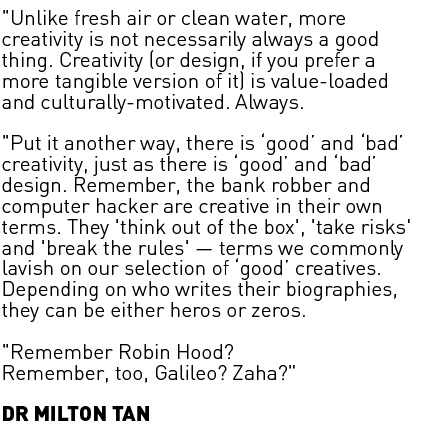
A late tribute to Dr Milton Tan

miltontan


On 8 November 2010, one of Singapore’s design pioneers, Dr Milton Tan, passed away. While working on a project recently, I got to learn more about the man, his efforts in promoting design through the government’s DesignSingapore Council (Dsg), and most of all, his ideas about design and creativity. This is my humble efforts to share his legacy with more people out there.

I never realised I had actually spoken to Dr Milton Tan until I decided to write this tribute to him last night. I was searching for some e-mail conversations I had with a friend about him when I found an e-mail that Dr Tan wrote to me six years ago. I was then an undergraduate working on a school project evaluating the Renaissance City proposal where for some reason I wrote straight to him — the Executive Director of Dsg — to ask for facts and figures about our arts and the economy. He did reply, and referred me to the right person to write to.

The only problem: it was nine months after I had sent the e-mail.

By then I had already turned to other sources for information, and in a fit of frustration at bureaucracy, I fired back an e-mail pointing out how ridiculous it was that I had to wait so long for a reply. To my surprise, he wrote back and agreed that it was unacceptable for me to receive a reply so late.

On hindsight, I think it’s actually amazing that Dr Tan even bothered to write back after nine months. To do so after so long suggests he genuinely wanted to help in some way. He could have just ignored my e-mail, and quite safely assumed that it had all been forgotten. But he didn’t.

Six years on, our paths crossed again. This time, I read about him in an upcoming article written by his former colleague and friend for The Design Society Journal. It’s a moving tribute about a man who helped lay the foundation for the government’s strategy for design promotion in Singapore in the new millennium. Dr Tan also kept a blog of his thoughts about design and creativity, and even talked about publishing a book. I’m not sure if the book will become a reality now that he has passed.

Here is a selection of some of his writings from his blog that really piqued my mind:

Hopefully, one day, these and more of his writings can be put together in a book to be shared with more. The last thing I have to say is to Dr Tan:

I’m sorry that this tribute came so late, “I agree that it is not acceptable for you to wait.”

VOTE FOR ME: Elections Posters in Singapore (2)

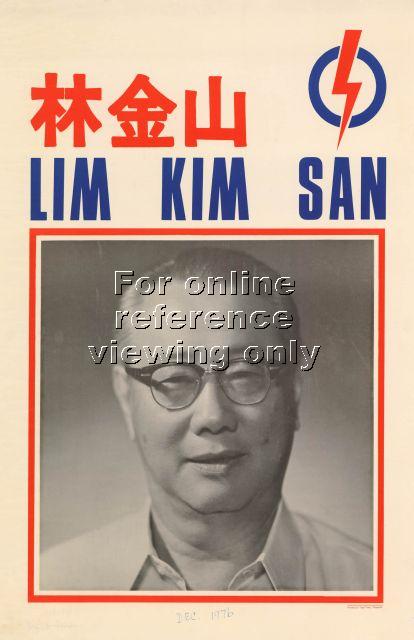
In the previous post, I talked about the manifesto posters that the various political parties put up during a General Elections. This time around, I’ll be looking at the posters that feature the candidates. Above are the various poster designs of the People’s Action Party (PAP) in 1972, 1976, 1988 and 1991 respectively. The lack of colour coincides with the period when colour printing wasn’t cheaply available yet. The choice of portraits was also conservative, or maybe even practical, since it is just as likely that these would have used for Identity Cards, or worse, funerals. It was only in the 1997 elections that the candidate photos came in colour, and by 2001, Photoshop also came into the picture.
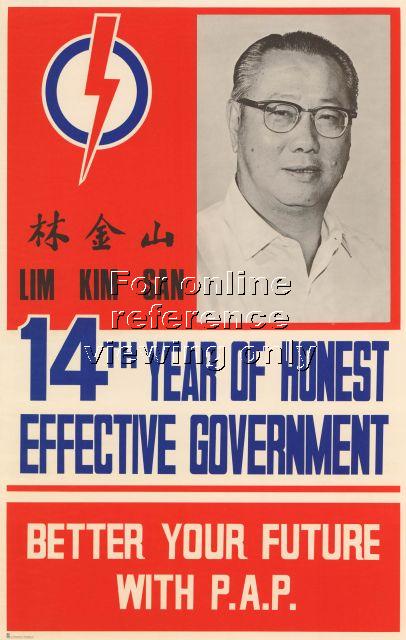
1972 PAP Lim Kim San

1976 PAP Lim Kim San

1988 PAP LKY

1991 PAP Single

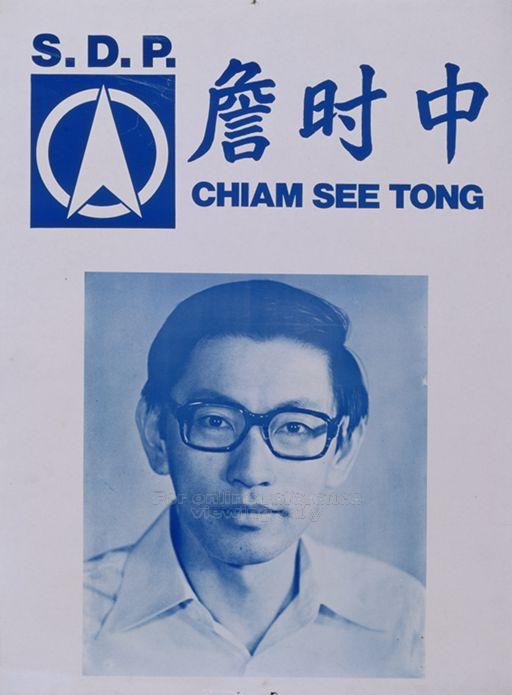
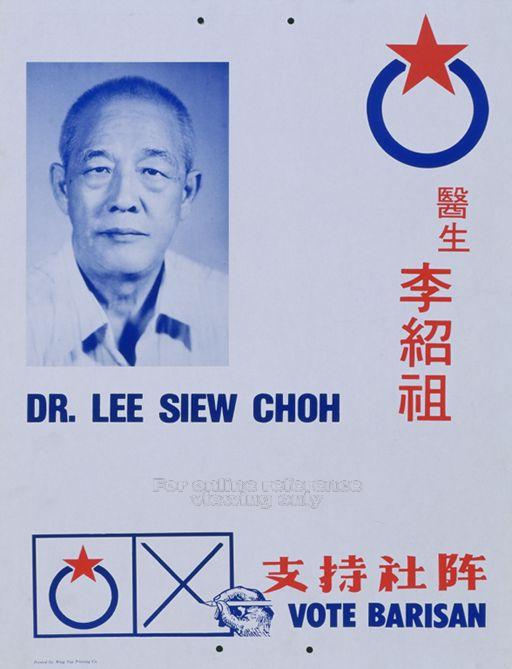
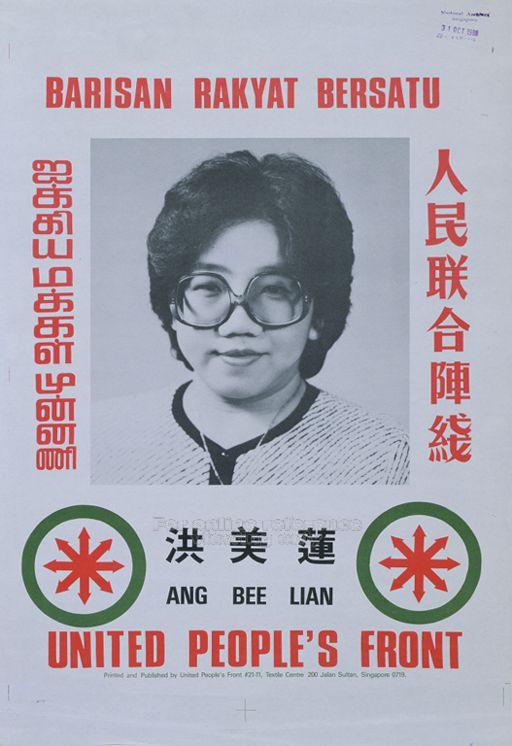
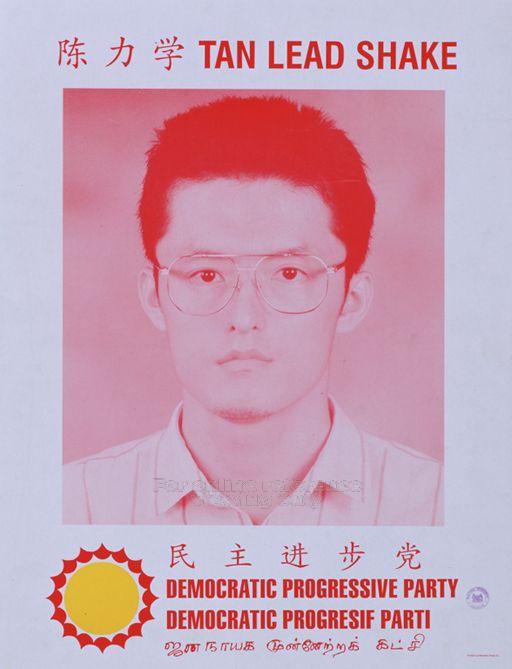
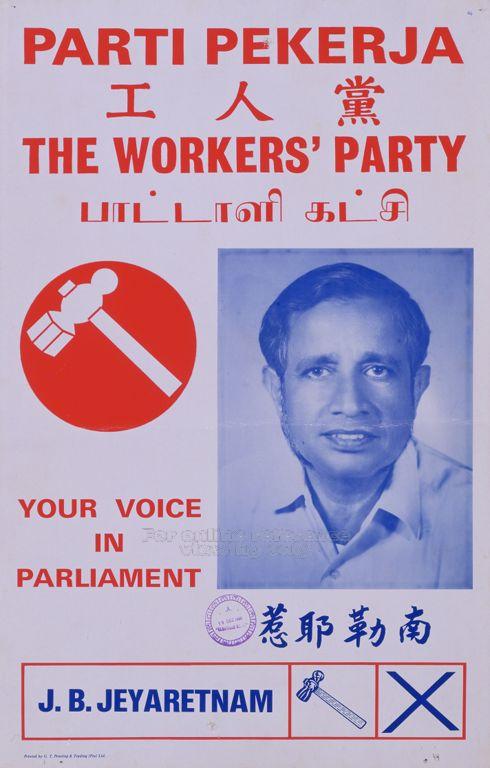
In contrast to these posters of the ruling PAP, the candidate posters of the opposition parties have generally been ‘less designed’, as evident in these posters of the Workers’ Party (WP) (1980), Barisan Sosialis (BS) (1984), Singapore Democratic Party (SDP) (1984), United People’s Front (1988), Democratic Progressive Party (1997) and National Solidarity Party (NSP) (1997). With the exception of NSP’s poster, the other opposition candidates don’t subscribe to the “less is more” attitude of the PAP posters. Instead, they try to squeeze the logo, slogan, party name (in all four languages!), candidate name, and in case you still don’t get it, icon or tagline reminding you to vote for him or her. One might attribute this desire to squeeze as much as they can to the lack of funding to print better posters, but one must also remember that by law, each candidate has a fixed budget for their elections campaign. For the last elections, one could only spend on average, $3 per voter.1980 WP Single
1984 SDP Chiam See Tong

1984 BS Lee Siew Choh

1988 UPF Single

1997 DPP Tan Lead Shake

1997 NSP Christopher Neo

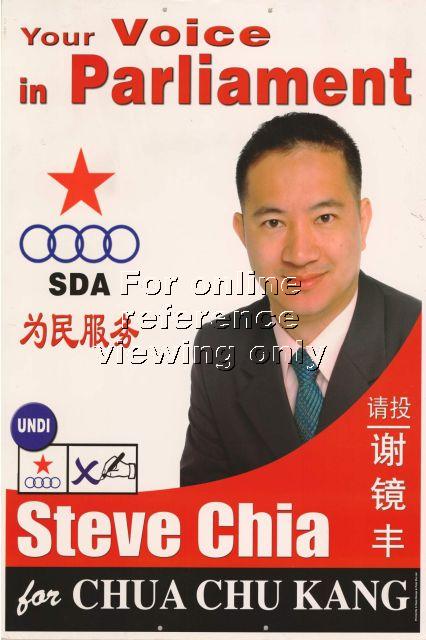
There few exceptions of distinctly designed posters of opposition candidates have come from two controversial ones: SDP’s Chee Soon Juan (1997) and Singapore Democratic Alliance’s Steve Chia (2006 and 2001). For some reason, the latter’s posters reminds me of real estate advertisements. I think it’s the man in a suit with the choice of colours.
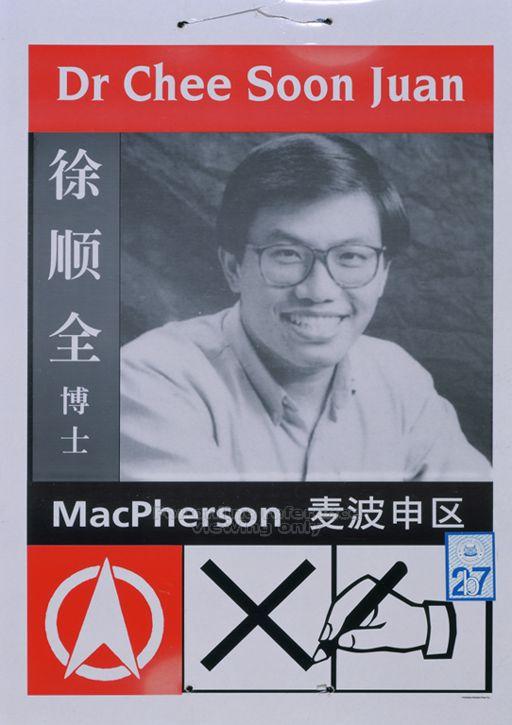
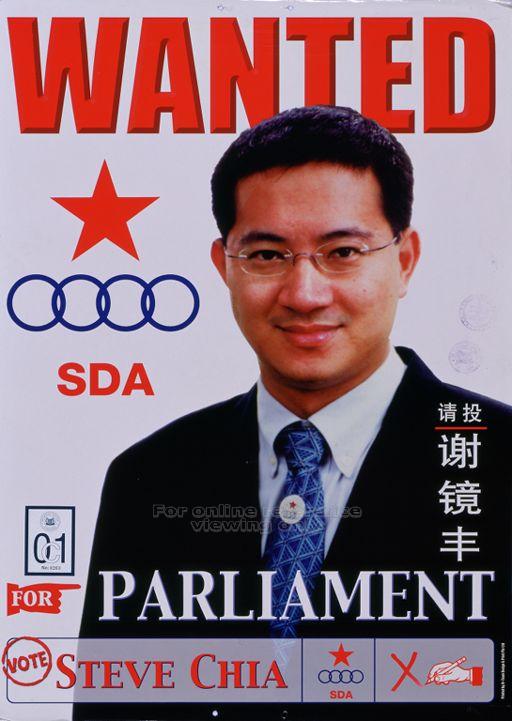
1997 SDP Chee Soon Juan

2001 SDA Steve Chia

2006 SDA Steve Chia

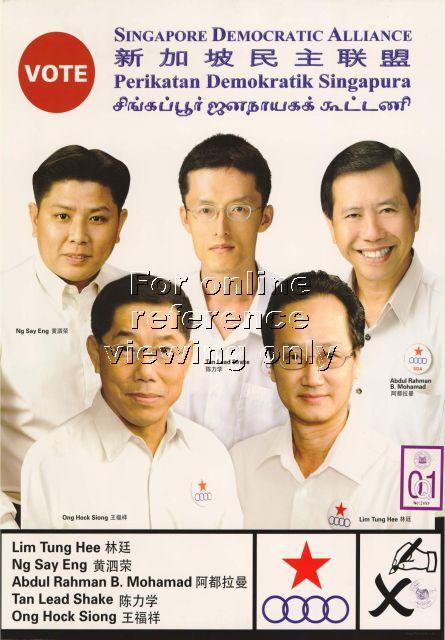
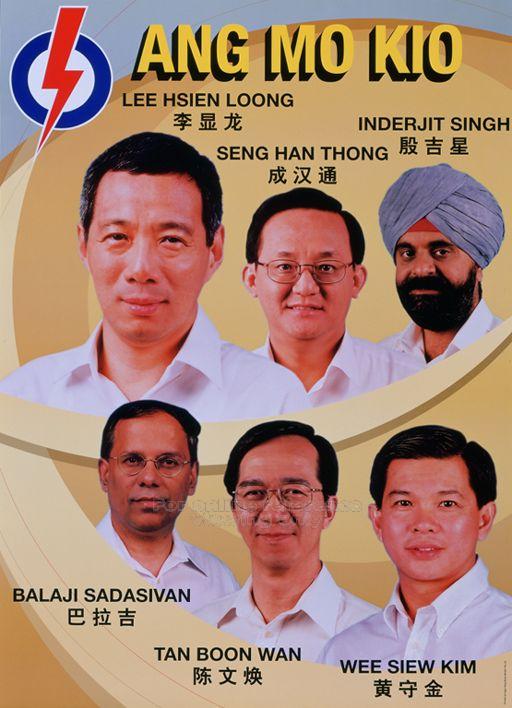
A new type of candidate posters had to be designed in 1988 when the Group Representation Constituency (GRC) came about. Suddenly, one candidate had to share the same space with two or more as seen in these posters of the PAP (1988), WP (1997), SDA (2006) and PAP (2001).
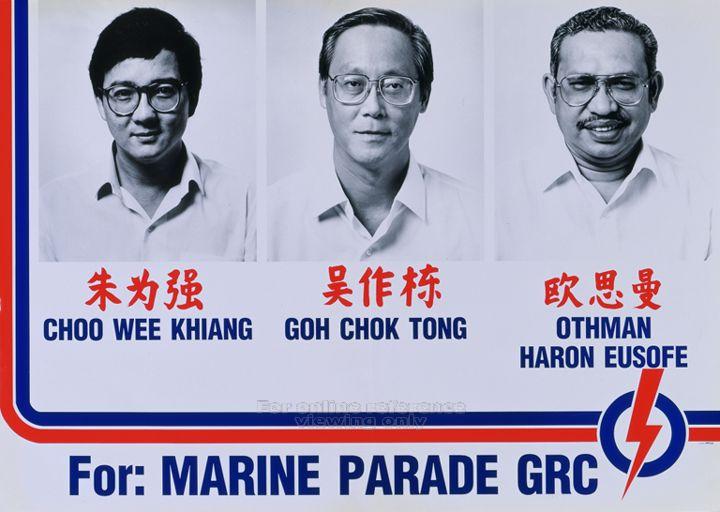
1988 PAP GRC


1997 WP GRC

2006 SDA GRC

2001 PAP GRC 1


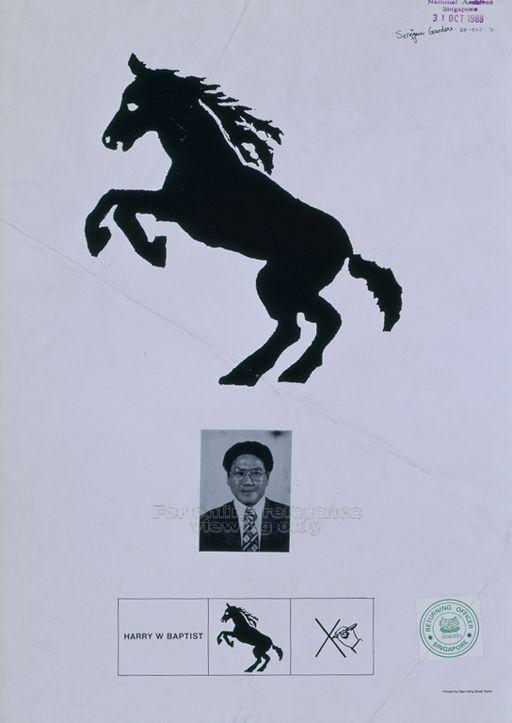
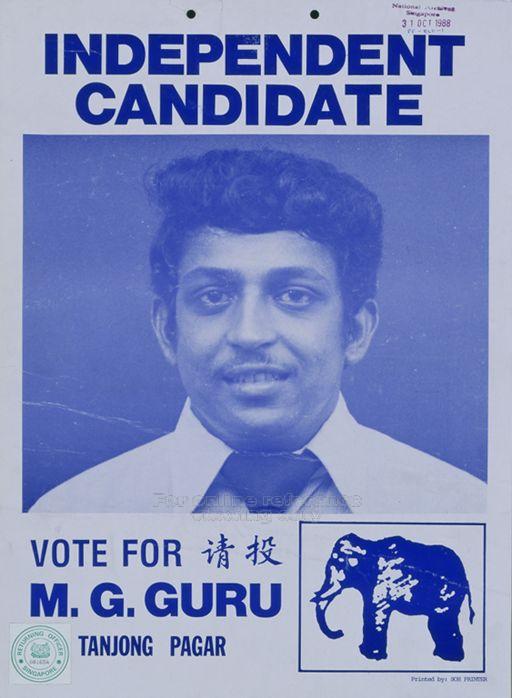
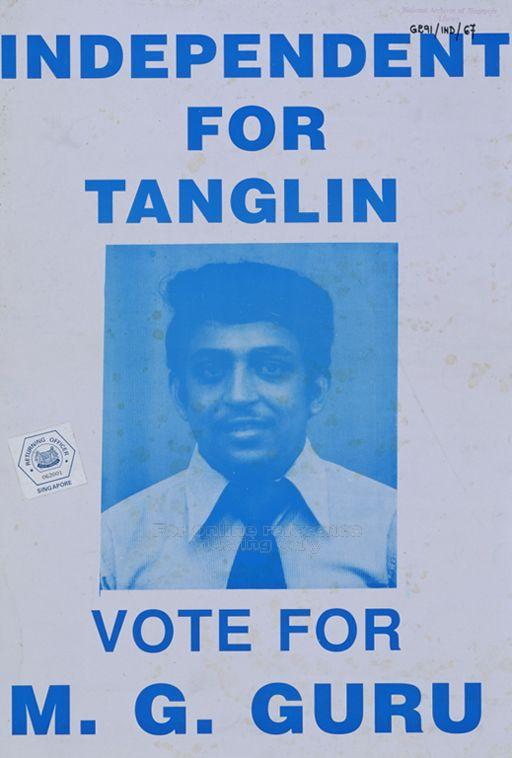
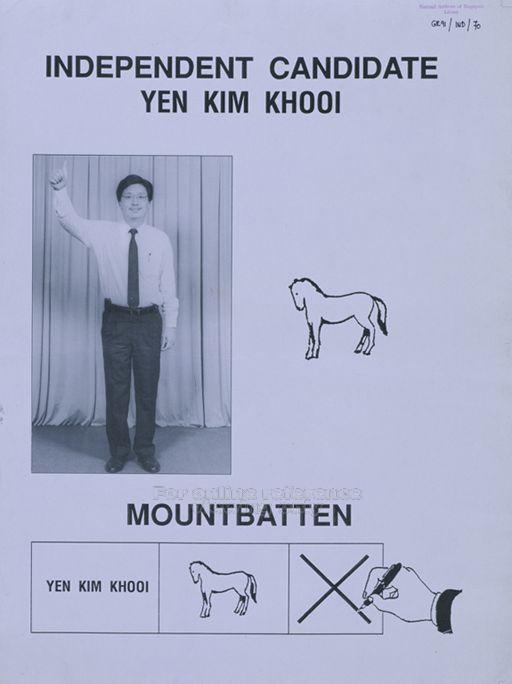
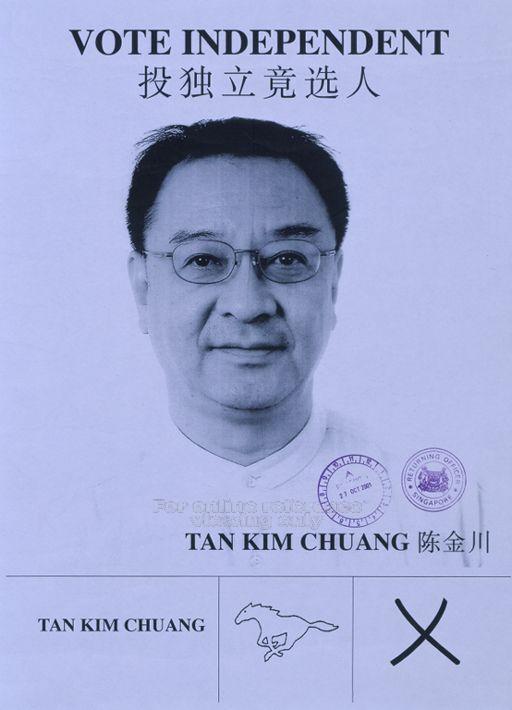
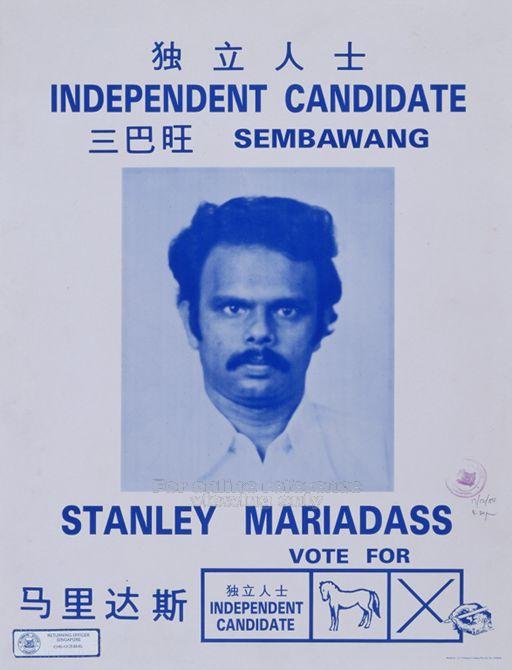
Finally, just a quick look at a quirky category of posters that belong to the independent candidate, a breed that has not existed since the 2001 elections. Their posters reflects how inadequate they are without the resources and machinery of a party.
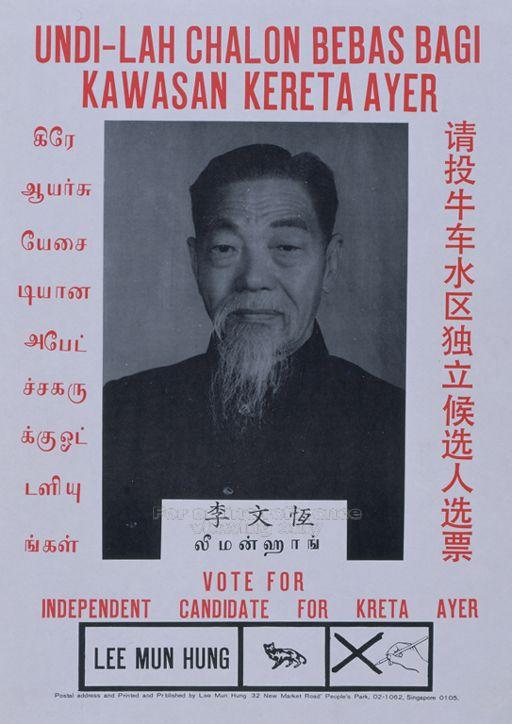
1984 IND Lee Mun Hung

1984 IND Stanley

1988 IND Harry

1988 IND MG Guru

1991 IND M G Guru

1991 IND Yen 1

2001 IND Tan Kim Chuang