Category: History

Pressing for Singapore

Donald Moore and his wife, Joanna, helped build an arts and culture scene in Singapore and Malaya after the second World War. | COURTESY OF SUMI SAITO
A pioneer in developing Singapore’s post-war arts and culture scene is finally getting the spotlight he deserves. A retrospective exhibition has been organised for Mr Donald Moore, a writer, publisher, theatre producer and co-owner of lifestyle-concept store Donald Moore Galleries.

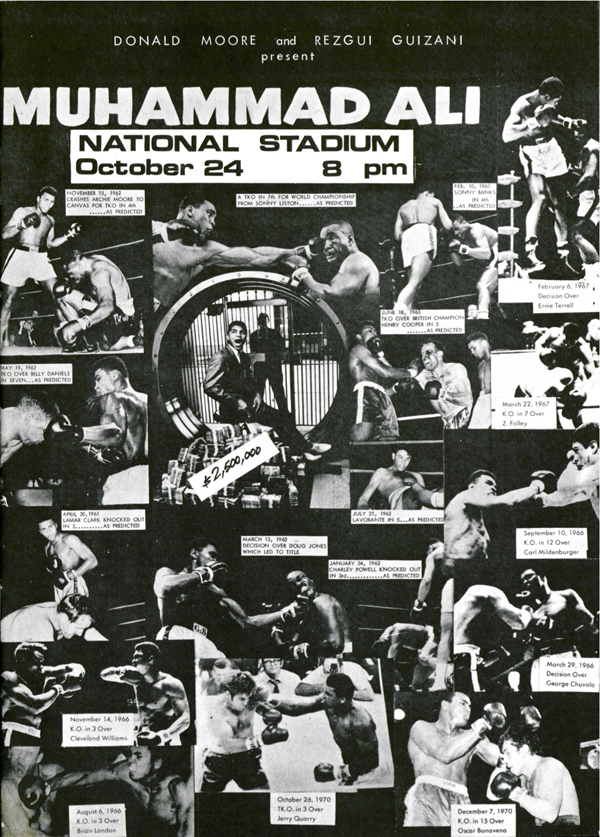
The Arts House, with the help of book publisher Goh Eck Kheng, have put together some 80 artefacts —  books, programme leaflets and Moore’s photographs — to tell the forgotten tale of a man who created a multi-million empire in Malaya by bringing in world-class acts like Mohammed Ali and publishing the first biography on Lee Kuan Yew. This all went bust 30 years later as Moore eventually went bankrupt and left for England with only £250 in his pocket.


The programme cover for the 1973 Muhammad Ali exhibition fight that Moore brought in. | DONALD MOORE COLLECTION, COURTESY OF NATIONAL ARCHIVES OF SINGAPORE

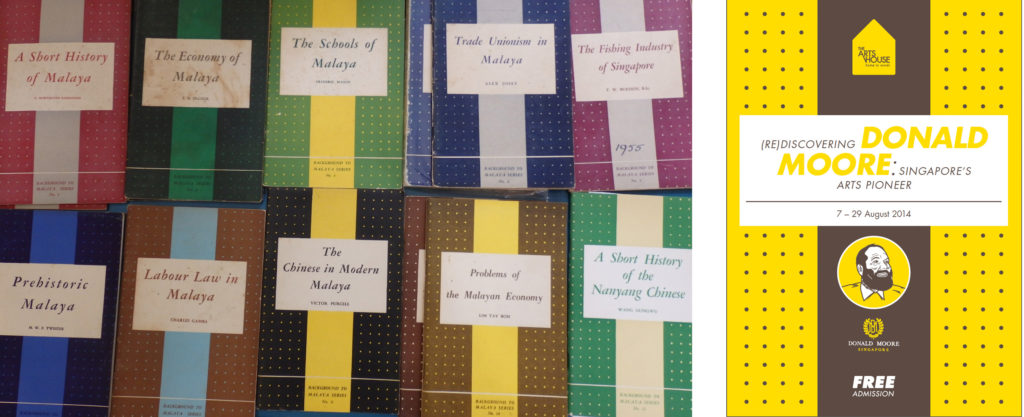
Through his imprint “Donald Moore Press,” Moore printed many books on the arts and culture in Singapore and Malaya, including a “Background to Malaya Series” in the 1950s. This was written by various writers such as journalist Alex Josey and academic Wang Gungwu, who gave insights to the region via a range of topics such as its pre-history, education system and even the state of the fishing industry.

In the 1950s, Moore published the “Background to Malaya Series” (left) which featured various academics and writers expounding on different aspects of Malaya. They were the inspiration for the new exhibition’s flyer (right).

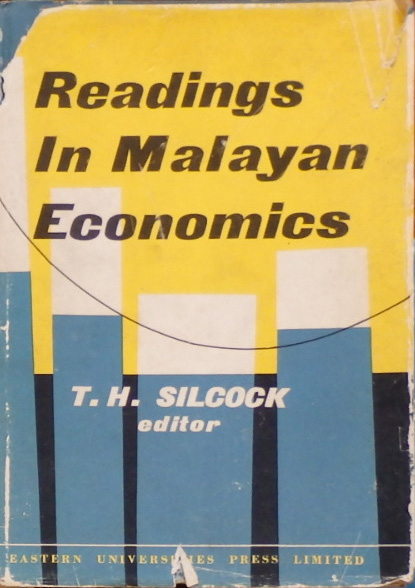
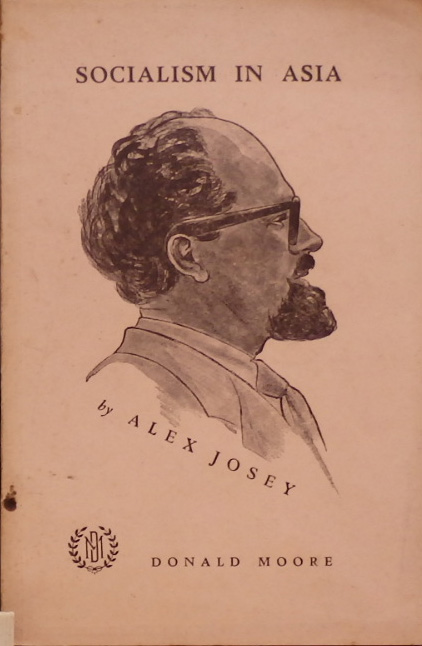
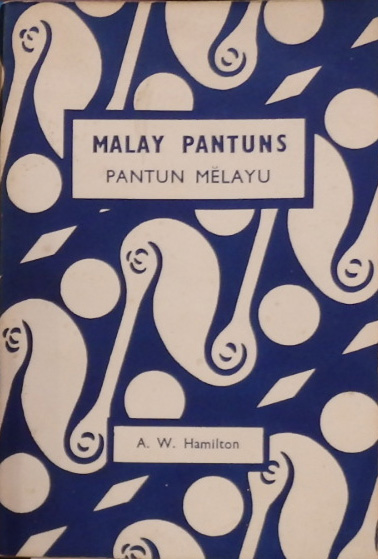
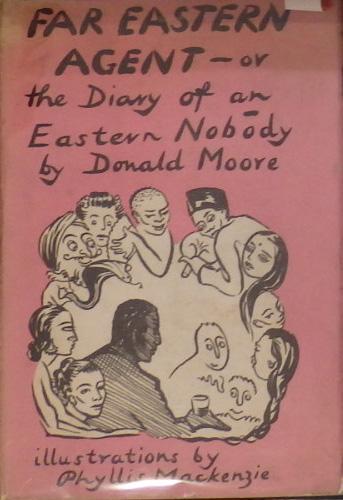
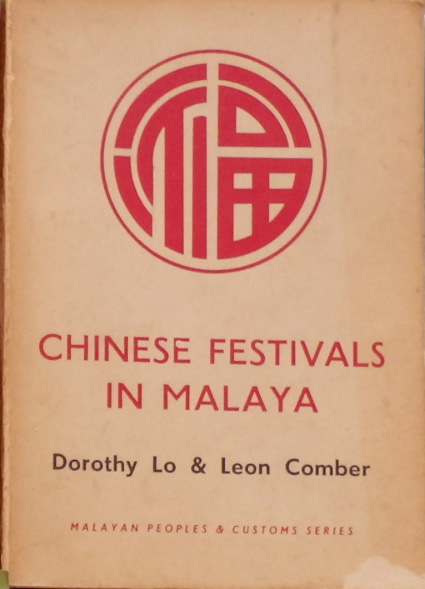
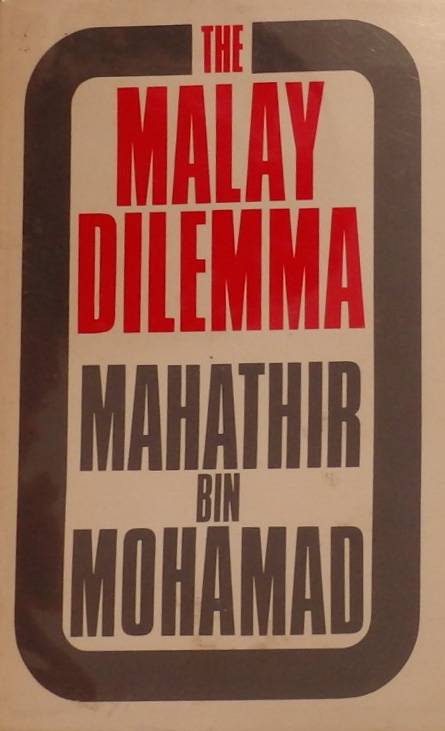
Below is a gallery of book covers published (or written) by Moore courtesy of Mr Lai Chee Kien who is also moderating a panel discussion this Thursday on this renaissance man and his contributions to Singapore’s arts and culture scene.

Readings in Malayan Economics (1961) by T.H. Silcock.
Socialism in Asia (1957) by Alex Josey
Malay Pantuns (1982) by A.W. Hamilton
Far East Agent (1953) by Donald Moore
Chinese Festivals in Malaya (1958) by Dorothy Lo and Leon Comber
The Malay Dilemma (1970) by Mahathir bin Mohamad.
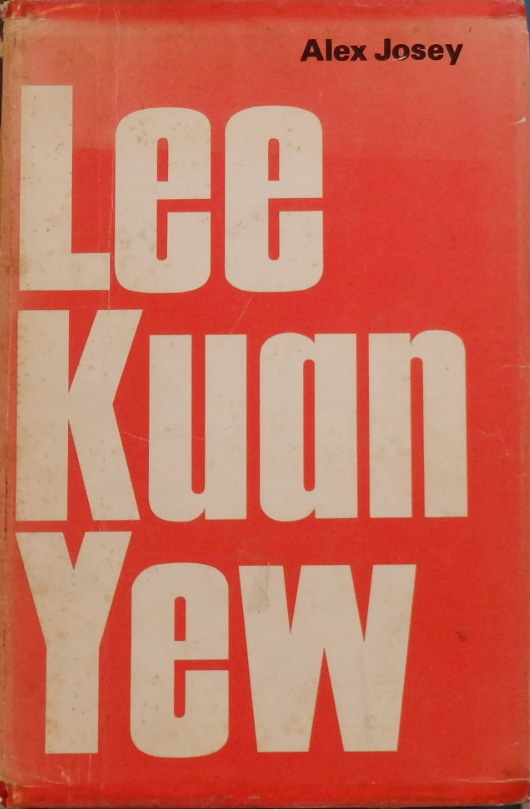
Lee Kuan Yew (1971) by Alex Josey.
Gurkha (1970) by Robin Adshead
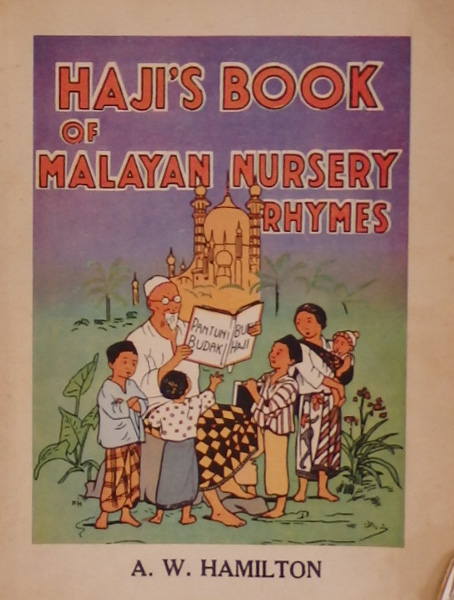
ajis Book of Malayan Nursery Rhymes (1956) by A.W. Hamilton. Illustrated by Nore Hamerton
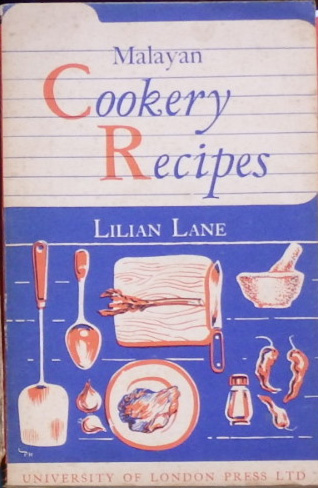
Malayan Cookery Recipes (1964) by Lilian Lane

HHH: Vote for Hubert Horatio Humphrey!

HHH-Final

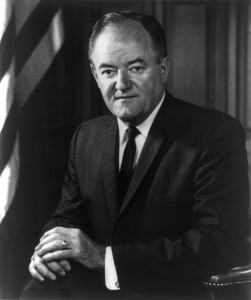
Just three letters said it all. In 1968, “HHH” could mean only one thing in the United States: Hubert Horatio Humphrey. He was the vice-president of the country, and more importantly, the Democratic Party candidate for the upcoming presidential elections.
503px-H_Humphrey

Like countless candidates before him, Humphrey’s face and name became integral visual elements of an election campaign. From picture posters to matchbooks, ceramic plates to calendars, and even cushions—Humphrey appeared everywhere and anywhere that year.

One of the cheapest and most widely available platform for advertising then was the button. Candidates gave out this small fashion accessory for free, and supporters who wore them became personal billboards for their campaign. The button is usually circular, although it has also been produced as tabs, lapels and other forms. Regardless of shape, the size of a button is always limited—typically ranging between 1 to 4 inches—so the message it carries has to be effective and economical.
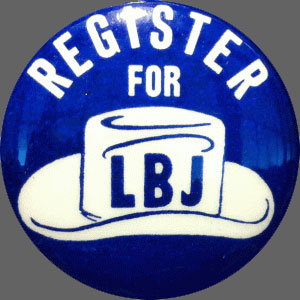
LBJ

Recognizing what a mouthful his name was, Humphrey condensed it to “HHH” for the ‘68 campaign. He must have learnt from President Lyndon Baines Johnson, better known as LBJ, whom he had successfully run for office with just four years before. While the portrait of a candidate or his name was commonly used on a button since this marketing device was first introduced in the 1896 elections, the times were a’changing. As television took over the role of giving a face to the candidate from the 1950s, buttons could look more abstract. “HHH” not only fitted easily into a button, it combined to create a distinct logotype that was paired with different designs in various styles

This particular set of buttons have nothing else on them except “HHH” set in what looks like an extra condensed version of typeface News Gothic Bold. While the buttons of his competitor, Richard Nixon, came in the traditional patriotic colors of red, blue, and white, this set of Humphrey pins were unusual with their colorful mustard yellow and aqua green background. Perhaps it was a reminder of how Humphrey stood  up for the colored and was the main author of the Civil Rights Act. Or had the psychedelic ‘60s crept into the politics of this liberal candidate?

Additionally, these buttons do not match the official ones given out by the Democrats’ national committees. They could have been issued by local offices or commercial companies eager to cash in on the growing popularity of collecting campaign buttons. Just as how money and politics are so intertwined in the US, campaign buttons were commoditized. By 1973, a Hobby Protection Act was even enacted to protect collectors from imitation items that had flooded the market.

Several clues on these buttons suggest they are legitimate. Instead of having a separate safety pin on their backs, these buttons have bent pins integrated in them just like early designs. The edges of the buttons also have printed labels that read “Allied Printing”, presumably a historical union printer.
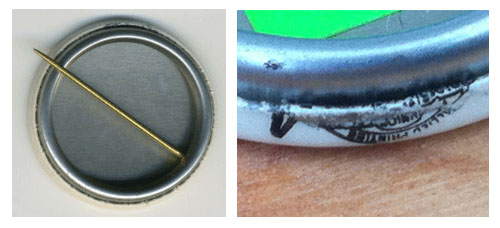
Pin+Allied

One thing is for sure: Humphrey’s campaign was unlike the orderly arrangement of the buttons’ design and their celebratory colors. In 1968, he not only struggled to overcome a Democratic party divided by the Vietnam War, the nominee kept coming up against angry anti-war protestors, which even led to police violence. Humphrey narrowly lost to Nixon, rendering “HHH” just another slogan of a failed presidential campaign.

———–
Written for Steven Heller’s Researching Design class at D-Crit.
445 Park Avenue: Architecture from the Inside-Out

445 Park AveAt just 22-stories tall, nondescript, and boxy, 445 Park Avenue is easily passed over when talking about architecture along its avenue. It neither has the intricate classical ornamentation of its next door Ritz Tower or the spectacular transparency of the glass-walled 450 Park Avenue across it. And built right up to the street, this office building offers pedestrians nothing more than a shadow of its presence.

But it would be wrong to equate 445 Park Avenue’s lack of distinction to a building that writer Ada Louise Huxtable might regard as “economically styled” rather than “architecturally designed” . Far from a result of “accident, expediency, economics and the inevitable march of industrial advance”, this building designed by Kahn & Jacobs for developer Paul Tishman is a highly functional product that demonstrated how modern office buildings could work in Park Avenue.

As one of its architects Ely Jacques Kahn once said, a building must first and foremost work for its inhabitants. “The architect’s first objective should be the study of the use of materials and the designing of a building that works — something that works from the inside out. What we should do is to consider function and let style follow as a corollary,” he said. Similarly, 445 Park Avenue has an interior substance deserving of more attention than what its undistinguished exterior presents.

That this office could be built so soon after the second World War — it was the first such development — and was completely filled in just over a year , is in a part, due to Kahn & Jacobs’ design. Their modernist approach of using standardized modules allowed for faster and easier construction compared to traditional methods, and would have helped convince the government to approve its building in 1946, even though construction was then heavily regulated as New York City transited to a peace-time economy after the war . The building design was also attractive to businesses because of its large spaces that could be easily partitioned, a feature made possible by the elimination of heavy columns on the exterior of its design. In addition, the standardized windows were of a ratio convenient for office layouts , and its horizontal system of arrangement lit up the building’s interiors such that workers did not feel trapped like in pre-war buildings with heavy masonry . Such a highly functional interior was enhanced by being fully air-conditioned, a first in New York City, and the combination was then regarded by architecture critic Lewis Mumford as “the best answer to the year-round problem of lighting and heating” . It is no wonder Tishman regarded his building as the office space of tomorrow, and 445 Park Avenue played a significant role in ushering the modern offices that followed after it.

But instead of taking the building’s modernist interior to its logical conclusion, as in the entirely glass International Style buildings that followed after 445 Park Avenue, Kahn & Jacobs designed an architecture sensible to its context. It is harder to appreciate now, but the building’s alternating masonry bands, would have fit into a street lined with ornamented masonry-clad buildings then. Its ziggurat top — Kahn’s signature response to the setback requirements of the 1916 Zoning Resolution — also echoed an evolution, rather than a disruption of the avenue’s architecture. These features gave 445 Park Avenue a sense of place, or what Kahn once called a “New York Style” of architecture. By “localizing” the International Style, 445 Park Avenue was unique to the city, familiar to the public, yet still took half a step towards the impending modernist future.

Perhaps, it is also this conservative stance that prevented 445 Park Avenue from looking beyond itself. While the pragmatic building achieves the maximum function for its developer and inhabitants, and fits into its urban context, it does not go beyond, unlike the nearby Lever House and Seagram buildings which sacrificed functional space to build public plazas. Even so, it should not diminish too much from 445 Park Avenue’s commitment as an office building that simply functions, which was much more vital during the period of economic and political uncertainty when it was built. Instead of grand public gestures and seeking an iconic exterior, Kahn and Jacobs created a building that became a backdrop for life in the city . Given how architecture today has become so much about the surface rather than function, 445 Park Avenue is a a reminder of why we build architecture: as a space that works “inside out” rather than “outside in”.

Bibliography

  • “Architects’ Rows ‘Silly,’ Kahn Says.” New York Times, 23 February 1932.
  • “Big Tishman Building on Park Ave. Filled.” New York Times, 8 Dec 1947, 45.
  • Huxtable, Ada Louise. “Park Avenue School of Architecture.” New York Times, 15 December 1957.
  • Mumford, Lewis. “The Sky Line.” The New Yorker, 13 December 1947, 85-92.
  • Stern, Jewel, and John A. Stuart. Ely Jacques Kahn, Architect: Beaux-Arts to Modernism in New York. New York: W.W. Norton & Company, 2006.
  • “Tishman Building Gets CPA Sanction.” New York Times, 17 July 1946, 37.


———–
Written for Karrie Jacobs’ 
Urban Curation class at D-Crit on a building in Park Avenue.