Tag: Graphic Design

#ADesignLibrary: 石汉瑞启蒙者 (Henry Steiner: Graphic Communicator) (2019)

Before design became globalised, some practitioners advocated for a cross-cultural approach that combined modernism’s international ambitions with local sensibilities. 石汉瑞:启蒙者 (Henry Steiner: Graphic Communicator) (2019) brings together the works, essays and interviews of one such trailblazer. The Vienna-born Steiner brought the modern graphic design principles he learnt from Paul Rand in New York to Hong Kong in the mid-1960s just in time for the city’s economic takeoff. By playing off cultural opposites of West and East, he showed one way modernist design ideas were adopted and adapted in Asia. While Steiner‘s works have been published in English, this comprehensive collection, edited by 何东, is entirely in Chinese and introduces him to a new generation and geography. It was published for a 2019 Steiner retrospective curated by designer He Jianping (何见平), who also designed this book.

#ADesignLibrary spotlights lesser known design books, and invites public access to my personal collection of titles that focuses on Singapore architecture and design, Asian design, everyday design, critical and speculative design as well as design theory and philosophy. I welcome inquiries and physical loans.

How Innovative Print Publishing Takes Creativity from Local to Global

Estonian indie publisher Lugemik on its last decade, and why it still takes forever to reply to emails 

When graphic designer Indrek Sirkel first conceived Lugemik, he planned to translate and publish important texts about design and art into Estonian. A decade on, his publishing initiative has become known for the opposite: translating art and design from the Baltic state and bringing it to the rest of the world.

The plan changed when a client of Sirkel, Mari Laanemets, wanted a catalog for a show she was curating but lacked the budget for a traditional publisher. Sirkel, a graduate of the Gerrit Rietveld Academy in Amsterdam, offered to design and publish Life Would Be Easy in 2010. This was quickly followed by several exhibition catalogs with other artists from Estonia, and Lugemik was born, co-founded with Anu Vahtra.

➜ Read the full story in AIGA’s Eye on Design

When Design Met Technology

Two pioneer designers recall how they rode the digital wave in the eighties and nineties when Singapore took great strides to become an IT Nation   

From CD-ROM to CD Bomb

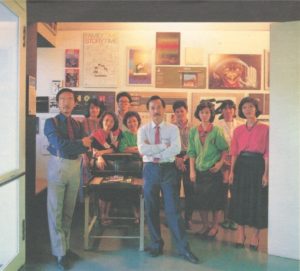
Ching San (centre) with his partner, Gim Lee (left) and their staff at Octogram’s offices in the 1990s.

Once a beaming object of tomorrow’s technological future, the CD-ROM is more likely to be found in a kopitiam today, hanging as a shiny prop to scare birds away. The rise and demise of this medium also reflects the story of Lim Ching San’s design consultancy.

In the mid-nineties, Octogram rode on the incoming Information Technology (IT) wave to become one of Singapore’s earliest multimedia publishing houses. Working with clients ranging from government agencies to the creators of the then popular local comic, Mr Kiasu, Ching San and his team integrated texts, images, videos and games into CD-ROMs to tell their stories on a computer. This was supposed to be the future of publishing, he says, pointing to a yellowed photocopy of a 1993 New York Times article titled “Books will give way to CD-ROM, say experts”. But as the story goes, CD-ROMs died in a matter of years when Singapore plugged itself into high-speed internet at the end of the millennium.

“The whole business bombed, and all my publishing business was gone!” recalls Ching San who ran Octogram for close to two decades until closing it in 2002 because of the CD-ROM flop and the dot-com bubble burst then. “When you talk about technology, you can be right at the peak, and the next moment you can fall.”

Read more