 The Year of the Dragon in 2024 saw dragons pop up across Singapore. Some lined the streets of Chinatown and took centre stage in festivities. Others starred in advertisements and even popped up inside shopping malls. The creature representing last year’s Chinese zodiac was embraced by businesses and organisations as part of the traditional Lunar New Year celebrations.
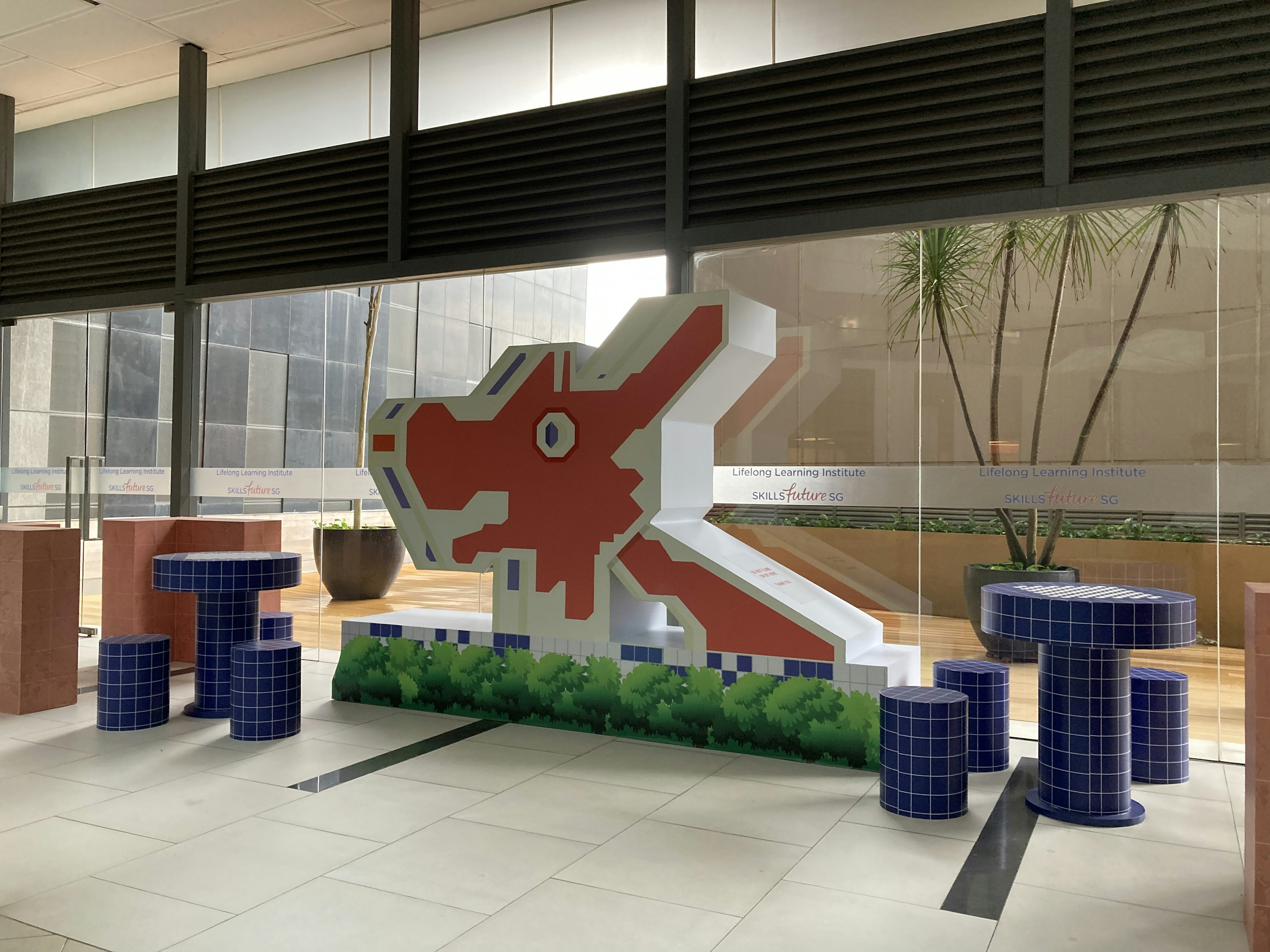
While there were many different versions of the dragon, one design stood out: a geometric rendition with mosaic-like skin and an octagonal eye, popularly known among locals as the “dragon playground”. It was nowhere in sight during the last Year of the Dragon but appeared everywhere 12 years later. The recent popularity of the design was even more curious considering it is based on a playground that was first introduced in Singapore over forty years ago. Several were built along with new public housing estates in the 1970s and 1980s, but almost all were demolished by the early 2000s. In fact, only four examples of the dragon playground from that period still stand today.
How did a nearly extinct design return some two decades later to become a popular national icon? This revival reflects the expanded role of design in Singapore since the 2000s. As the country began developing a creative economy, design was recognised more than just a tool for industrialisation, but one that can also shape culture and represent national identity. The story of the dragon playground demonstrates how ideas of nationhood are neither inherent in a design nor solely inscribed by the designer. Instead, “Singapore design” is an ongoing construction that evolves alongside changing ideas of the nation in the country.
➜ Read the full essay in Issue #1 of the SAM Design Collection Journal