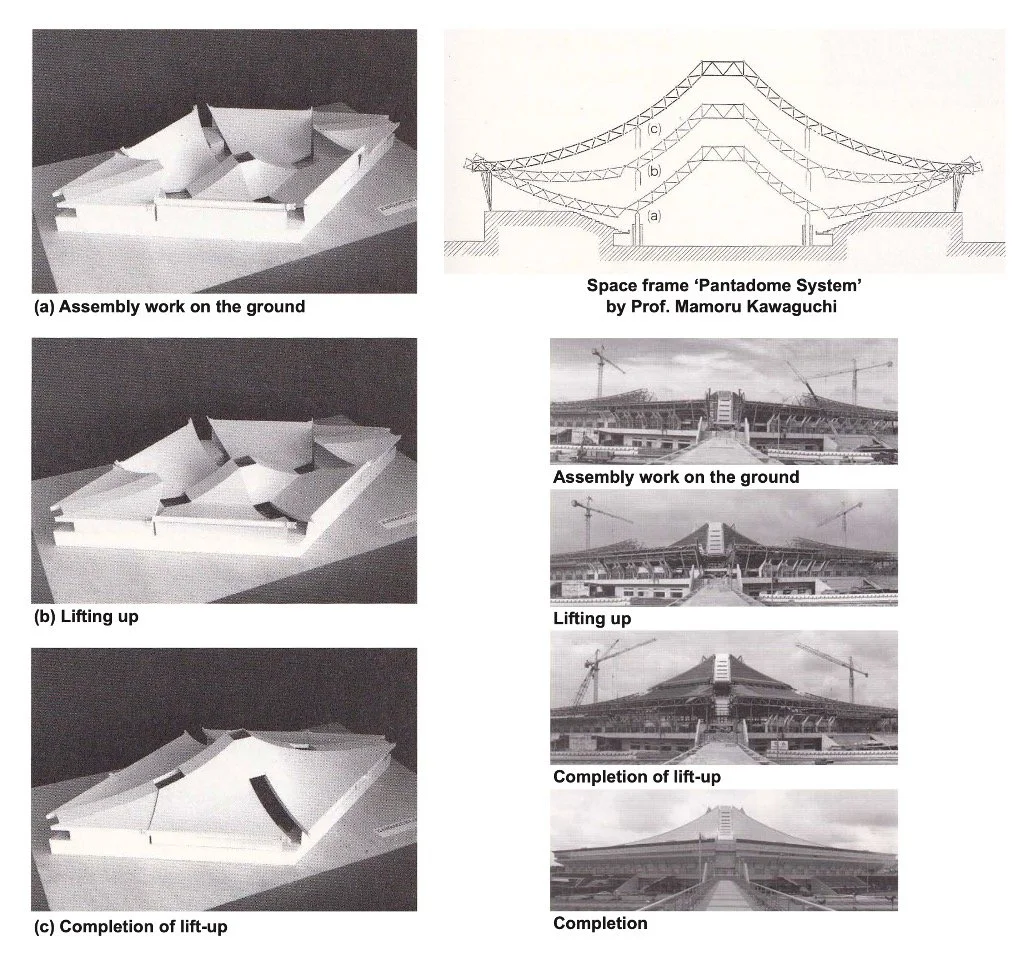
Some have likened it to a traditional Japanese hat. Others see the outlines of a Star Destroyer spaceship from the futuristic movie Star Wars. Without a doubt, the roof of the Singapore Indoor Stadium is one of—if not, the most—distinguishing feature that has made it a familiar icon along the Kallang Basin today.
The design first arose almost forty years ago when Japanese architect Professor Kenzo Tange was appointed by the Singapore government to partner Singapore-based RSP Architects Planners & Engineers to help develop an indoor stadium in 1985. He and his team, including Yasuhiro Ishino and Paul Tange, his son, set about coming with a building that would blend in with its waterfront location then shared with the former National Stadium and other attractions such as the Wonderland Amusement Park and the Oasis Theatre Restaurant Niteclub and Cabaret.
 Whether it is by sea, air or even digital space, Singapore is one of the world’s most connected cities today. It is plugged into an array of networks that are largely invisible unless there is a breakdown in their operations. The disruptions due to the recent pandemic, for instance, pulled back the curtain on the global supply chains that power everyday life in Singapore.