 This project embarks on an investigation of what it means to teach, learn, and practice criticality in design. Set against the backdrop of a neoliberal economic system and an industry constantly disrupted by emerging technologies, it takes a deep dive into the tension between education and professional practice. It examines how design, as a field increasingly seen as crucial to navigating the future, is being redefined—and whether “criticality” is being nurtured or neglected along the way.
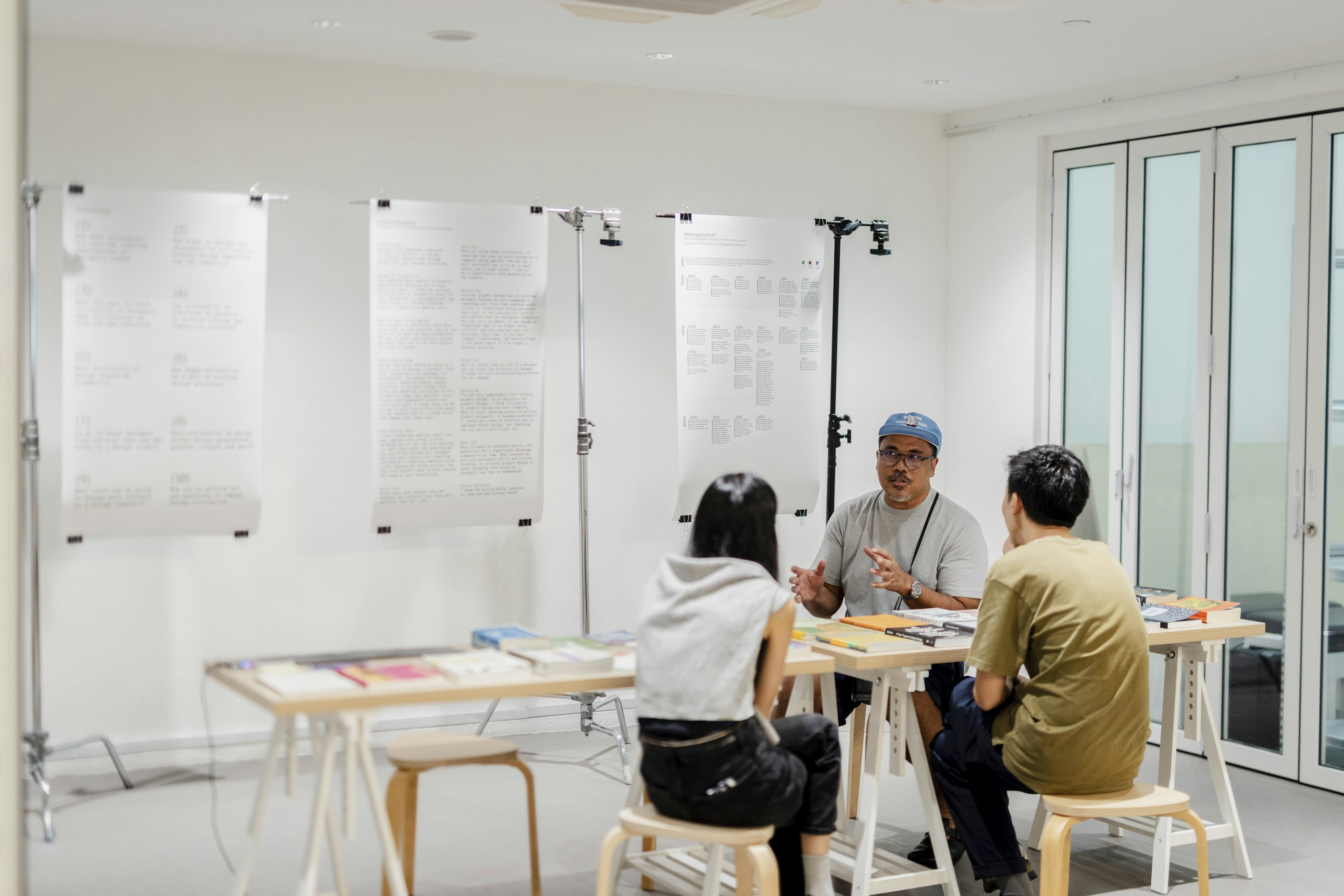
Prior to the Fellowship, initiators Candice Ng, Justin Zhuang and Vanessa Ban had conducted interviews with 12 local educators and designers on this topic. The Fellowship supported the organisation of an invite-only panel discussion, hosted at the SAM residency spaces, to further explore the role of criticality in Singapore design practices and how it is taught in local design schools. The primary goal of the event was to foster dialogue between industry and academia and encourage a shared understanding and vocabulary to advance the teaching, learning and practice of criticality within contemporary design practice.
➜ Read more about the project at the SAM Design Collection website